Why Joint Pain Increases During Weather Change

Why Joint Pain Increases During Weather Change

 WHY JOINT PAIN INCREASES DURING WEATHER CHANGE

Joint pain is something that a lot of people deal with especially when they get older or have conditions like Osteoarthritis or Rheumatoid arthritis. A lot of people notice that their joint pain gets worse when the weather changes, like when it gets cold or rainy. Is this just something people say or is there really a connection between joint pain and the weather? This blog by Dr. Chirag Arora, best in Gurgaon, clears all the myths about joint pain and if it’s actually linked with weather change. 

Understanding Joint Pain and Weather Connection

Doctors and patients have been looking into this. A lot of them agree that changes in the weather can affect your joints. Some things that can trigger pain include:

  • Drop in temperature
  • Increase in humidity
  • Changes in pressure

These changes can affect the tissues, nerves and fluid inside your joints, which can cause discomfort or stiffness.

  1. Changes in Barometric Pressure

The weight of the air around us is called pressure. When the weather changes, like before it rains or during winter this pressure often drops.

How it affects joints:

  • The pressure dropping allows the tissues in your body to expand a bit
  • This expansion can put pressure on your joints
  • It can also irritate your nerves and make the pain worse

People with arthritis or old injuries are more sensitive to these changes, which is why they often feel pain before the weather changes.

  1. Cold Temperature and Joint Stiffness

Cold weather is one of the reasons why people’s joints get stiff.

Why does it happen:

  • The cold makes your muscles and ligaments tighten up
  • The blood flow to your joints gets reduced, making them feel stiff
  • The fluid that helps your joints move smoothly gets thicker making it harder to move

This is why a lot of people feel stiffer in the morning during the winter.

    1. Increased Humidity and Inflammation

    When it’s really humid it can make joint pain worse for people with conditions that cause inflammation.

    Effects include:

    • Swelling in the joints
    • Nerves getting more sensitive
    • More discomfort when you move

    The humidity can make your body feel heavier and less flexible which puts stress on your joints.

    1. Reduced Physical Activity

    When the weather changes, especially when it’s cold or rainy people often don’t move around much.

    Impact on joints:

    • Less movement makes your joints get stiff
    • Your muscles get weaker
    • Your joints don’t move well

    You need to move regularly to keep your joints healthy and not moving can make the pain worse.

    1. Psychological Factors

    The weather can also affect how you feel.

    • Cold and cloudy weather can make you feel tired
    • Not getting enough sunlight can affect your
    • More stress can make the pain feel worse

    How you feel about the pain is connected to your mental well-being so changes in your mood can make the joint pain worse.

    Who Is Affected by Joint Pain?

    Joint pain that’s related to the weather is more common in:

    • Older people
    • People with arthritis like osteoarthritis or rheumatoid arthritis
    • People who have hurt their joints before
    • People with chronic pain

      Tips to Manage Joint Pain During Weather Change

      Here are some ways to reduce the discomfort:

      1. Stay Warm
      • Wear clothes that keep you warm
      • Use heating pads or warm compresses
      1. Keep Moving
      • Do some exercises, like walking or stretching
      • Don’t sit around for too long
      1. Eat a Healthy Diet
      • Include foods that help reduce inflammation like Turmeric, Ginger and Omega-3
      • Drink plenty of water
      1. Keep a Healthy Weight

      If you’re too heavy it can put pressure on your joints, especially your knees

      1. Try Physiotherapy

      It can help you move better and reduce stiffness

      1. Get Medical Advice
      • If the pain is really bad, consult an expert orthopedic doctor near you.
      • The right medicine and therapy can help you manage the symptoms

        When Should You See a Doctor?

        You should see a doctor if:

        • The pain is really bad and it doesn’t go away
        • Your joints get swollen or red
        • Movement is causing a lot of pain.
        • The pain gets in the way of your life

          Conclusion

          Joint pain when the weather changes is a real thing that a lot of people experience. While it might not affect everyone, people with certain conditions are more sensitive to changes in the weather. If you understand what’s causing the pain and take steps to prevent it you can manage the pain. Stay active all year round. Joint pain and weather changes are. Knowing this can help you deal with joint pain. Book an appointment with Dr. Chirag Arora, best orthopedic care to get a one stop solution for your joint problems.

            Frequently Asked Questions

            Q1. Is pain during weather change real?

            Yes a lot of people experience joint pain when the temperature, humidity or air pressure changes.

            Q2. What kind of weather causes joint pain?

            Cold and damp weather are the common reasons for joint stiffness and pain.

            Q3. Can young people also feel pain when the weather changes?

            Yes, especially if they’ve hurt their joints before. Have a condition that affects their joints.

            Q4. Does exercise help reduce pain in cold weather?

            Yes, exercising regularly even if it’s a little bit can help you move better and reduce stiffness.

            Q5. Can joint pain predict weather changes?

            Some people feel pain before the weather changes because of the pressure. It’s not a reliable way to predict the weather.

            Dr. Chirag Arora has over 15+ years of expertise in Shoulder, Knee and Sports injuries, specializes in advanced treatments options including operative (surgical), regenerative and non-operative methods, ensuring faster recovery, pain-free movement and early return to peak performance.


            Everyday Activities That Make Shoulder Pain Worse

            Everyday Activities That Make Shoulder Pain Worse

            EVERYDAY ACTIVITIES THAT MAKE WORSE

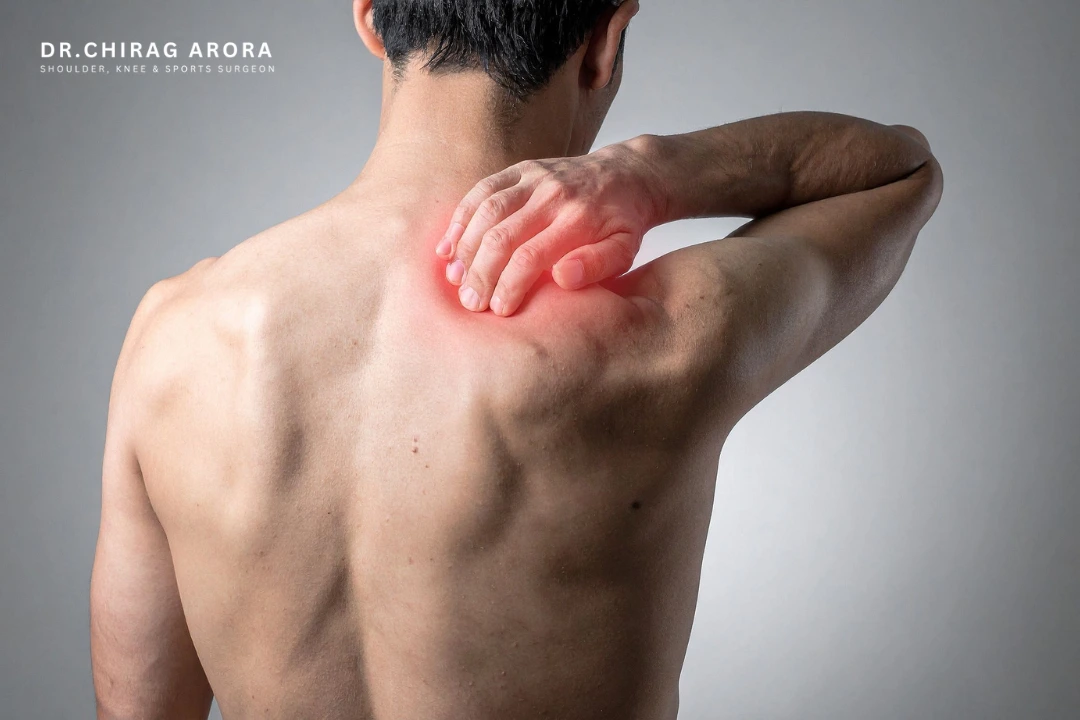
            Shoulder pain can sneak into your daily life without warning. One day it’s a mild ache, and the next it’s limiting how you move, sleep, or even sit.

            Here’s the part most people miss: your everyday habits could be making it worse. Small, repeated actions often do more damage than one big injury.

            Let’s break down the common activities that aggravate shoulder pain and what you can do instead.

            1. Poor Posture While Sitting

            Slouching at your desk or looking down at your phone strains your shoulder muscles and upper back.

            Over time, this leads to:

            What helps

            • Keep your screen at eye level
            • Sit upright with your back supported
            • Take breaks every 30–40 minutes

            2. Sleeping on the Same Shoulder

            Sleeping on one side all night puts constant pressure on that shoulder.

            This can lead to:

            • Night shoulder pain
            • Reduced range of motion
            • Worsening of rotator cuff pain

            What helps

            • Switch sides or sleep on your back
            • Use a supportive pillow
            • Avoid placing your arm under your head

            3. Repetitive Overhead Movements

            Activities like reaching for shelves or certain workouts can strain your shoulder over time.

            This often causes:

            Examples

            • Lifting weights incorrectly
            • Painting walls
            • Playing sports like tennis or badminton

            4. Carrying Heavy Bags on One Shoulder

            A heavy handbag or laptop bag puts uneven stress on your body.

            This leads to:

            What helps

            • Use a backpack with both straps
            • Lighten your load
            • Alternate sides regularly

            5. Ignoring Early Signs of Pain

            Many people push through discomfort, assuming it will go away.

            But untreated pain can turn into:

            What helps

            • Rest when pain starts
            • Use ice or heat therapy
            • Seek help if pain lasts more than a few days

            6. Bad Workout Form

            Exercise is great, until it’s done wrong.

            Poor form during workouts can strain your rotator cuff muscles and lead to injury.

            Common mistakes

            • Lifting too heavy, too soon
            • Skipping warm-ups
            • Overtraining the same muscle group

            What helps

            • Focus on proper technique
            • Start with lighter weights
            • Include shoulder strengthening exercises

            7. Long Hours on Phones and Laptops

            Constant screen time affects your posture and shoulder alignment.

            This results in:

            • Shoulder tension
            • Tight neck muscles
            • Increased shoulder discomfort

            What helps

            • Hold your phone at eye level
            • Use ergonomic setups for work
            • Stretch every hour

            8. Driving for Long Periods

            Holding the steering wheel for hours can strain your shoulders, especially if your seat position is off.

            This can cause:

            • Stiffness in the upper body
            • Limited movement after long drives

            What helps

            • Adjust your seat and steering height
            • Take breaks during long trips
            • Relax your shoulders while driving

            9. Not Stretching or Moving Enough

            A sedentary lifestyle weakens muscles and reduces flexibility.

            This increases the risk of:

            • Muscle stiffness
            • Poor blood flow
            • Higher chance of injury

            What helps

            • Do simple daily stretches
            • Stay active throughout the day
            • Include mobility exercises

            Simple Daily Tips to Reduce Shoulder Pain

            Small changes can protect your shoulders long-term:

            • Maintain proper posture
            • Stay active but avoid overuse
            • Practice pain relief exercises regularly
            • Strengthen surrounding muscles
            • Listen to your body

            Conclusion

            Shoulder pain is rarely the result of a single incident; it typically develops gradually due to repetitive strain and everyday habits over time.

            This underscores the importance of maintaining a healthy daily routine. Addressing minor issues early and adopting proper posture and movement patterns can help prevent more serious complications and support long-term shoulder . Consult to Dr. Chirag Arora,

            FAQs About Shoulder Pain

              1. What is the most common cause of shoulder pain?

              The most common causes include poor posture, repetitive movements, and .

              1. Can daily habits really worsen shoulder pain?

              Yes, repetitive strain and poor posture can significantly increase shoulder discomfort over time.

              1. When should I worry about shoulder pain?

              If pain lasts more than a few weeks, limits movement, or worsens at night, seek medical advice.

              1. Is exercise good for shoulder pain?

              Yes, but only the right kind. Focus on gentle stretching and shoulder strengthening exercises.

              1. How can I prevent shoulder pain in daily life?

              Maintain good posture, avoid overuse, stretch regularly, and address pain early.

              What Is a Rotator Cuff Injury? Symptoms & Causes

              What Is a Rotator Cuff Injury? Symptoms & Causes

              What Is a ? Symptoms & Causes

              A Rotator Cuff Injury is one of the most common causes of , especially in adults who perform repetitive arm movements. It affects a group of muscles and tendons that stabilize your shoulder joint and help you lift and rotate your arm.

              In many cases, it develops slowly over time due to wear and tear, also known as tendon degeneration. Understanding the symptoms and causes early from an expert orthopedic doctor in Gurgaon, like Dr. Chirag Arora Best Orthopedic Surgeon In Gurgaon can help you avoid long-term damage and get back to normal movement faster.

              Common Symptoms of Rotator Cuff Injury

              Symptoms can depend on the severity, but most people notice gradual discomfort before it becomes serious.

              Persistent Shoulder Pain

              • Dull ache deep in the shoulder
              • Pain that worsens at night (night shoulder pain)
              • Discomfort when lying on the affected side

              Weakness in the Arm

              • Difficulty lifting objects
              • Reduced shoulder strength
              • Trouble performing daily activities like combing hair

              Limited Range of Motion

              Clicking or Popping Sensation

              • Sounds when moving the shoulder
              • Feeling of instability

              Pain During Specific Movements

              • Reaching behind your back
              • Lifting items above shoulder level
              • Pain during overhead activities

              Main Causes of Rotator Cuff Injury

              Let’s break it down. This injury usually happens in two ways: sudden damage or gradual degeneration.

              1. Repetitive Stress

              Repeated shoulder movements can strain the tendons over time.

              Common in:

              • Athletes (tennis, cricket, swimming)
              • Painters, carpenters, and construction workers
              1. Age-Related Degeneration

              As you age, tendon strength naturally decreases.

              • Reduced blood supply to the shoulder tendons
              • Increased risk after age 40
              • Higher chance of tendon inflammation and damage
              1. Acute Injury

              A sudden movement or trauma can cause a tear.

              Examples:

              • Falling on an outstretched arm
              • Lifting something too heavy
              • Shoulder dislocation
              1. Poor Posture

              Slouching or improper sitting posture puts extra stress on the shoulder muscles, increasing the risk of .

              1. Bone Spurs

              Extra bone growth can rub against the tendon, leading to irritation and injury.

              Risk Factors You Should Know

                Certain factors increase the likelihood of developing this condition:

                • Aging and natural tendon degeneration
                • Jobs requiring repetitive arm motion
                • Sports involving overhead movement
                • Weak shoulder muscles
                • Previous

                When Should You See a Doctor?

                Don’t ignore persistent shoulder pain. Seek medical advice if you notice:

                • Pain lasting more than a few weeks
                • Weakness in the arm
                • Inability to lift your arm
                • Severe pain after an injury

                Early diagnosis can prevent the condition from worsening.

                Quick Tips to Protect Your Shoulder

                Small changes and consulting , a shoulder specialist in Gurgaon, can make a big difference:

                • Warm up before physical activity
                • Practice rotator cuff exercises regularly
                • Avoid repetitive strain when possible
                • Maintain good posture
                • Take breaks during repetitive tasks


                  Conclusion

                  A Rotator Cuff Injury might start as mild discomfort, but ignoring it can lead to serious complications. The key is early recognition and proper care from a trusted shoulder doctor like Dr. Chirag Arora Best Orthopedic Surgeon In Gurgaon. 

                  What this really means is simple: listen to your body. Shoulder pain isn’t something to push through. Address it early, and you’ll save yourself from a long recovery later.

                    Can Knee Pain Be Due to Weight Gain?

                    Can Knee Pain Be Due to Weight Gain?

                    CAN KNEE PAIN BE DUE TO WEIGHT GAIN?

                    Knee pain is one of the most common complaints seen in orthopedic practice at the moment. While injuries, growing, and medical conditions are frequently criticized, one major factor that’s constantly overlooked is weight gain. However, stiffness, or difficulty in movement, If you’ve been passing to the patient as knee discomfort.

                    In this blog by Dr. Chirag Arora, best orthopedic surgeon in Gurgaon, we’ll explore how are connected, the pitfalls involved, and what you can do to find relief.

                    How Does Weight Gain Affect Your Knees?

                    Your knees are among the most important weight-bearing joints in your body. Every step you take, whether walking, climbing stairs, or indeed standing, puts pressure on these joints.

                    A simple fact numerous people don’t realize is for every 1 kg of weight gained, your knees witness nearly 3 to 4 times further pressure.

                    This means indeed a small increase in body weight can significantly increase stress on the knee joint. Over time, this added pressure can lead to

                    • Wear and tear of cartilage
                    • Common inflammation
                    • Reduced inflexibility
                    • Habitual knee pain

                    This is why is getting decreasingly common, especially in civic cultures.

                    Common Knee Problems Linked to Weight Gain:

                    1. Osteoarthritis

                    One of the leading , osteoarthritis, occurs when the cartilage softening your joints wears down. redundant weight accelerates this process, making it a crucial threat factor.

                    2. Patellofemoral Pain Syndrome

                    Frequently called “runner’s knee,” this condition causes pain around the kneecap. Redundant weight can derange the joint and increase strain, worsening the pain.

                    3. Ligament Strain

                    Heavier body weight puts fresh stress on ligaments, adding the chances of strain or injury, indeed during routine movements.

                    Signs Your Knee Pain May Be Weight- Related

                      If you are wondering whether your knee pain is due to weight gain. Pain that worsens after walking or standing for long ages

                      • Stiffness in the morning or after inactivity
                      • Difficulty climbing stairs
                      • A feeling of heaviness or pressure in the knees
                      • Gradational increase in discomfort over time

                      These symptoms frequently indicate that your joints are under inordinate cargo.

                      Losing Weight Reduce Knee Pain? The good news is, yes, it can. Shedding pounds is a remarkably effective and organic method for alleviating knee discomfort. Studies have shown that indeed losing 5–10% of body weight can significantly drop joint stress and ameliorate mobility.

                      Benefits of weight loss include

                      • Reduced inflammation in the joints
                      • Lower pressure on knee cartilage
                      • Bettered inflexibility and movement
                      • Lower threat of developing osteoarthritis
                        For cases dealing with habitual knee pain, weight operation is frequently the first step toward long- term relief.

                      Tips to Manage Knee Pain Caused by Weight Gain

                      There are some practical way you can takeIf your knee pain is linked to weight gain.

                      1. Maintain a Healthy Weight

                      Aim for gradual and sustainable weight loss by following a balanced diet and staying physically active on a regular basis.

                      2. Choose Low-Impact Exercises

                      Conditioning like walking, swimming, and cycling is easier on the knees and helps strengthen girding muscles.

                      3. Build Stronger Muscles

                      Strong hamstrings and leg muscles give better support to the knee joint and help reduce stress on it.

                      4. Wear Proper Footwear

                      Choosing supportive shoes helps maintain proper alignment and reduces stress on your knees.

                      5. Consult an Orthopedic Specialist

                      It’s important to seek expert advice to help further damage, If pain persists.

                        When Should You See a Doctor?

                        While mild knee pain can frequently be managed with life changes, you should consult a specialist if:

                        • Pain lasts further than a many weeks
                        • Lump or stiffness increases
                        • You witness difficulty walking
                        • There’s a history of injury

                        Early opinion can help complications and help you recover briskly.

                          Expert Care for Knee Pain in Gurgaon

                          Timely treatment is pivotal if you are floundering with knee pain due to weight gain or any other reason. Dr. Chirag Arora, best knee surgeon in Gurgaon, offers advanced and individualized care for all types of knee conditions.

                          With a case-centric approach and moxie in treating common diseases, focuses on relating the root cause and furnishing effective, long-continuing results.

                            Conclusion

                            So, can knee pain be due to weight gain? Absolutely. The connection between body weight and common is stronger than utmost people realize. Ignoring it can lead to long- term damage, but the right way especially weight operation, can make a significant difference.

                            still, don’t ignore the signs, If you’re passing patient discomfort. Taking action moment can help you move freely and live pain-free.

                              Need expert advice? Consult Dr. Chirag Arora, for the treatment options for knee pain in Gurgaon and take the first step towards healthier joints.

                                Our Clinical Approach to Ankle Sprain

                                Our Clinical Approach to Ankle Sprain

                                Our Clinical Approach to Ankle Sprain

                                Below is a stepwise orthopedic workflow we use in our clinic.

                                Mechanism of injury

                                • Inversion → ATFL injury (outside sprain) (most common)
                                • Eversion → deltoid ligament (inside sprain)
                                • External rotation → syndesmotic (high ankle sprain)

                                Red flags

                                • Unable to bear weight immediately 
                                • Severe swelling within an hour (fracture)
                                • Locking/catching 
                                • Medial pain (deltoid injury)

                                Imaging

                                X-ray is almost always required, unless clinical decision is otherwise:

                                • bone tenderness OR
                                • unable to bear weight

                                MRI indications (never required before 6 weeks)

                                • persistent pain > 6 weeks
                                • recurrent
                                • elite athletes (off season)
                                • suspected osteochondral defect

                                Grading

                                GRADE 

                                PATHOLOGY

                                CLINICAL

                                I

                                Stretch

                                mild swelling, stable

                                II

                                Partial Tear

                                moderate pain, laxity

                                III

                                Complete Tear

                                gross instability

                                 Management Protocol

                                Acute phase (0–2 weeks)

                                PRICE protocol

                                • Protection (brace/Cast)
                                • Rest 
                                • Ice
                                • Compression
                                • Elevation

                                Medications

                                • Anti-inflammatory medications – short course 5-7 days
                                • Early weight bearing as tolerated
                                • Physiotherapy (Range of motion)

                                Walking Cast may be required

                                • Severe swelling 
                                • Fracture
                                • Repeated ankle sprains
                                • High grade injury

                                Return to sport criteria

                                  • full ROM
                                  • no swelling
                                  • 90–95% strength
                                  • single leg hop pain free
                                  • good proprioception

                                     Timelines:

                                  • Grade I → 1–2 weeks
                                  • Grade II → 3–6 weeks
                                  • Grade III → 6–8 weeks

                                  Surgical indications

                                  • chronic instability (> 3 months)
                                  • Recurrent swelling episodes during sports
                                  • Ankle instability (Exam)
                                  • syndesmotic diastasis
                                  • associated osteochondral lesion

                                  Options

                                  • Arthroscopic surgery (Brostom-gould repair)

                                  Our Practical Approach template

                                  Grade I–II

                                  • No immobilization required
                                  • Walking allowed
                                  • NSAIDs 5 days
                                  • Supplements
                                  • physio referral (ROM + strengthening)
                                  • review 14 days

                                  Grade III

                                  • Walking cast 2 weeks
                                  • Medications
                                  • supplements
                                  • structured rehab
                                  • reassess 6 weeks
                                  • return to sports > 6 weeks

                                  IF SYMPTOMS ARE PERSISTENT BEYOND 6 WEEKS, PROGRESS TO MRI.

                                    Consult Dr. Chirag Arora, Best , for expert evaluation, personalized rehab, and safe return to sports.