Shoulder Replacement Doctor in Gurgaon

Shoulder Replacement Doctor in Gurgaon

SHOULDER REPLACEMENT IN GURGAON

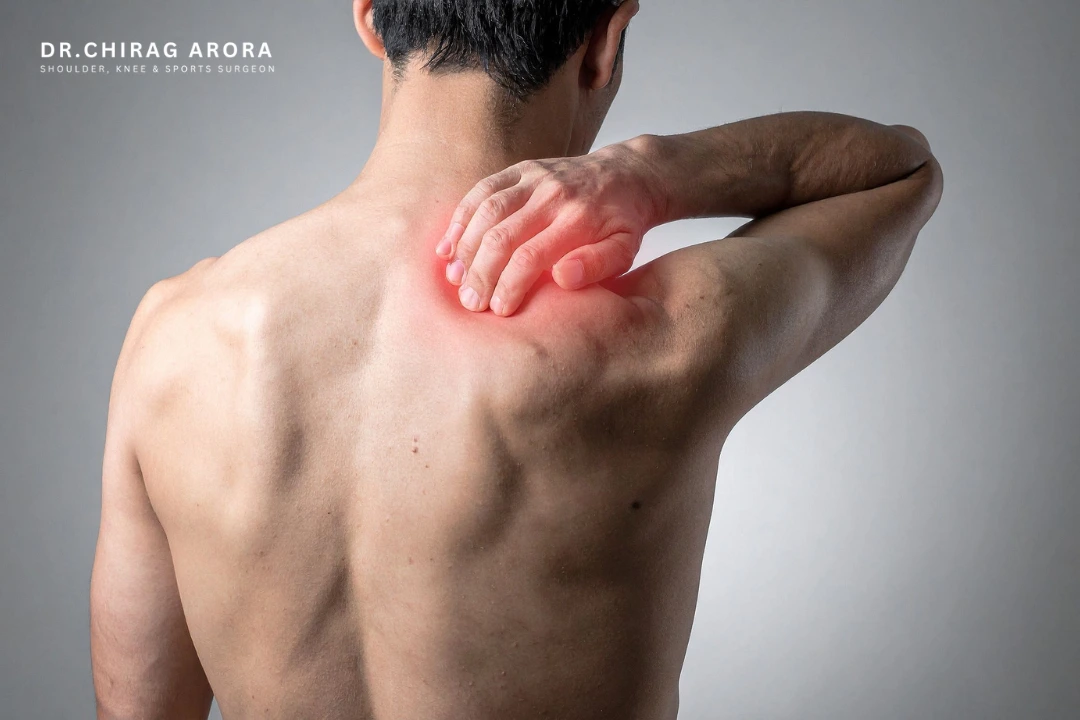
can make it really hard to do things like lifting your arm or combing your hair. When your is damaged it can be tough to sleep or reach for things. While medicines and therapy can help at first, sometimes shoulder arthritis or joint damage is so bad that you need surgery. That is when you need to see a who can help you move your arm again and feel pain relief.

If you are looking for the best shoulder doctor in Gurgaon, Dr. Chirag Arora is the best choice. He has a lot of experience with shoulder replacement surgery and can help you figure out what is wrong with your shoulder. He wants to help you get back to your life and do the things you love.

What is Shoulder Replacement Surgery?

    Shoulder replacement surgery is when a doctor replaces the damaged parts of your shoulder joint with artificial ones. This happens when your shoulder joint is severely affected by arthritis, injury, fracture, or another condition that makes it difficult to move.The shoulder joint works like a ball and socket. During shoulder replacement surgery, the doctor replaces the damaged ball and sometimes the socket with artificial components that are designed to move like a natural shoulder. An experienced shoulder replacement doctor in Gurgaon can assess how badly your joint is affected and decide on the best treatment plan for you.

    When Do You Need Shoulder Replacement Surgery?

      Not everyone with a shoulder problem needs surgery, you might need it if you have shoulder pain that does not go away even after medicines and physiotherapy. It may also be recommended if arthritis has severely damaged your shoulder joint or if moving your arm becomes difficult.

      Some other reasons you might need shoulder replacement surgery include:

      Common Conditions Treated with Shoulder Replacement

      • Osteoarthritis

      Osteoarthritis occurs when the cartilage inside the shoulder joint gradually wears away. This can lead to pain, stiffness, and reduced movement.

      • Rheumatoid Arthritis

      This autoimmune disease can damage the shoulder joint, causing pain, swelling, and loss of function.

      A severe rotator cuff tear can eventually lead to arthritis and instability in the shoulder.

      • Avascular Necrosis

      This condition develops when blood supply to the shoulder bone is reduced, causing bone damage and collapse.

      • Severe Shoulder Fractures

      Some complex shoulder fractures may require replacement surgery when reconstruction is not possible.

      Types of Shoulder Replacement Surgery

      • Total Shoulder Replacement

      This procedure replaces both the ball and socket of the shoulder joint.

      • Partial Shoulder Replacement

      Only the damaged ball portion of the shoulder joint is replaced.

      • Reverse Shoulder Replacement

      This specialized procedure is commonly used for patients with severe rotator cuff damage. The position of the ball and socket is reversed so other muscles can help move the arm.

      • Revision Shoulder Replacement

      This surgery is performed when a previous shoulder replacement needs correction or replacement.

      Benefits of Shoulder Replacement Surgery

      Shoulder replacement surgery can significantly improve quality of life. Benefits include:

      • Relief from chronic shoulder pain
      • Improved shoulder movement
      • Better strength and function
      • Easier performance of daily activities
      • Improved sleep quality
      • Greater independence
      • Long-term pain relief
      • Better overall quality of life

      Many patients are able to return to activities they enjoy after recovery.

      Why Choose for Shoulder Replacement in Gurgaon?

      Choosing the right surgeon is very important. Patients choose Dr. Chirag Arora because:

      • Extensive experience in shoulder replacement surgery
      • Personalized treatment plans
      • Advanced surgical techniques
      • Strong focus on patient safety
      • Comprehensive rehabilitation support
      • Compassionate and patient-centered care

      As a trusted , Dr. Chirag Arora helps patients understand their condition and treatment options.

        Recovery After Shoulder Replacement Surgery

        Recovery takes time and patience.Initially, patients spend a short period in the hospital before beginning rehabilitation exercises. A sling is usually worn to support the shoulder while healing takes place.

        Physiotherapy is an important part of recovery because it helps restore strength, flexibility, and movement.Full recovery may take several months depending on the type of surgery and individual healing.

          Tips to Maintain Shoulder After Surgery

          To help your shoulder replacement last longer:

          • Perform prescribed physiotherapy exercises regularly
          • Avoid lifting excessively heavy objects
          • Maintain a healthy body weight
          • Stay physically active
          • Attend regular follow-up appointments
          • Follow your doctor’s instructions carefully

          Conclusion

          Shoulder pain can have a major impact on your daily life and make simple tasks difficult. When non-surgical treatments no longer provide relief, shoulder replacement surgery can help restore movement and reduce pain.

          If you are looking for a trusted shoulder doctor in Gurgaon, Dr. Chirag Arora offers expert diagnosis, advanced treatment, and comprehensive care. As a leading orthopedic doctor in Gurgaon, Dr. Chirag is committed to helping patients regain shoulder function and enjoy a more active, pain-free life.

          Frequently Asked Questions

          Q1. Who is the best shoulder replacement doctor in Gurgaon?

          Dr. Chirag Arora is a highly experienced shoulder replacement specialist and orthopedic doctor in Gurgaon, known for providing advanced shoulder treatment and joint replacement care.

          Q2. When is shoulder replacement surgery recommended?

          Shoulder replacement is recommended when severe arthritis, fractures, or rotator cuff-related damage causes persistent pain and limited movement that does not improve with non-surgical treatment.

          Q3. How long does shoulder replacement surgery take?

          Most shoulder replacement procedures take approximately 1.5 to 3 hours, depending on the complexity of the case.

          Q4. Is shoulder replacement surgery painful?

          Patients receive anesthesia during surgery, and postoperative pain is managed with medications and rehabilitation programs.

          Q5. How long does recovery take after shoulder replacement?

          Most patients experience significant improvement within 3 to 6 months, although complete recovery may take up to a year.

          Q6. What is the success rate of shoulder replacement surgery?

          Shoulder replacement surgery has a high success rate, with most patients achieving excellent pain relief and improved shoulder function.

          Q7. Can elderly patients undergo shoulder replacement surgery?

          Yes, many elderly patients benefit from shoulder replacement surgery when medically fit for the procedure.

          Q8. How long do shoulder replacement implants last?

          Modern shoulder replacement implants can often last 15 to 20 years or longer, depending on activity levels and overall health.

          Q9. Why choose Dr. Chirag Arora for shoulder replacement surgery?

          Dr. Chirag Arora, a leading orthopedic doctor in Gurgaon, provides personalized care, advanced surgical expertise, and comprehensive rehabilitation support for shoulder replacement patients.

          Q10. How do I book an appointment with Dr. Chirag Arora?

          You can book an appointment with Dr. Chirag Arora, orthopedic doctor in Gurgaon, at Nirvana Clinic or at Fortis Hospital.
          Shoulder Replacement Doctor in Gurgaon, Dr. Chirag Arora, orthopedic doctor in Gurgaon, dr chirafg arora, shoulder replacement surgery Gurgaon, shoulder pain treatment Gurgaon, shoulder specialist Gurgaon, shoulder arthritis treatment Gurgaon, reverse shoulder replacement Gurgaon, total shoulder replacement Gurgaon, best orthopedic doctor in Gurgaon, shoulder joint replacement Gurgaon, shoulder surgeon Gurgaon, shoulder arthroplasty Gurgaon, shoulder fracture treatment Gurgaon, rotator cuff tear treatment Gurgaon, shoulder stiffness treatment Gurgaon, joint replacement surgeon Gurgaon, shoulder injury specialist Gurgaon, orthopedic specialist Gurgaon, shoulder care Gurgaon, shoulder replacement recovery, shoulder surgery Gurgaon, chronic shoulder pain treatment Gurgaon, advanced shoulder replacement Gurgaon
          Painful Shoulder: When to consider beyond Frozen Shoulder?

          Painful Shoulder: When to consider beyond Frozen Shoulder?

          PAINFUL SHOULDER : WHEN TO CONSIDER BEYOND ?

          Shoulder pain is one of the most common reasons patients visit an orthopaedic specialist. Two conditions that frequently cause discomfort, restriction, and night pain are Frozen Shoulder (Adhesive Capsulitis) and Rotator Cuff Tears. Although they may feel similar initially, their causes, symptoms, and treatments are completely different — which is why an accurate diagnosis is crucial.

          In this article, we break down the key differences every patient should understand, so you know when to seek treatment and what to expect.

          What Is Frozen Shoulder?

            Frozen Shoulder occurs when the capsule becomes inflamed, thickened, and extremely tight. This leads to progressive stiffness and difficulty moving the arm in all directions.

            Common characteristics

            • Severe stiffness
            • Pain (especially at night)
            • Gradual onset
            • Difficulty with routine activities like combing hair, reaching behind the back, or lifting the arm
            • Severly compromised movement/ROM.

            Common in

            • Women/Men aged 40–60
            • Diabetic patients/Thyroid issues
            • Post-injury or after prolonged immobilization (e.g., cast, sling)
            • Post surgery

            Frozen Shoulder is more of a stiffness problem than a tendon/strength problem.

            What Is a ?

              The rotator cuff is a group of tendons that stabilize the shoulder. These tendons include supraspinatus, infraspinatus, teres minor and subscapularis. A tear in any of these tendons — commonly the supraspinatus — leads to pain, weakness, and difficulty lifting the arm.

              Common characteristics

              • Sharp pain
              • Significant weakness when lifting or reaching overhead
              • Pain during activity
              • Often severe night pain
              • May follow an injury, fall, or heavy lifting

              Causes

              • Trauma
              • Age-related degeneration (common after age 50)
              • Repetitive overhead work or sports

              Rotator cuff tears are tendon injuries, not stiffness conditions.

              Frozen Shoulder vs Rotator Cuff Tear: The Key Differences

              1. Pain vs Stiffness

              Frozen Shoulder:

              • Both pain and stiffness are present, but stiffness is the main issue.

              Rotator Cuff Tear:

              • Pain and weakness are the dominant symptoms; stiffness is mild or secondary to pain, predominantly weakness of lifting strength.

              2. Range of Motion

              Frozen Shoulder:

              • Active + Passive ROM are both restricted.
                Even when the doctor moves your arm, movement is limited.

              Rotator Cuff Tear:

              • Active ROM is reduced, but
              • Passive ROM is usually normal.
                The doctor can lift your arm higher than you can on your own.

              3. Onset Pattern

              • Frozen Shoulder: Gradual, worsening over weeks to months.
              • Rotator Cuff Tear: Sudden after trauma OR slow degenerative onset.

              4. Weakness

              Frozen Shoulder:

              • Apparent weakness due to stiffness, not tendon damage.

              Rotator Cuff Tear:

              • True weakness because the tendon is torn.

              5. Night Pain

              Both may cause night pain, but it is typically much more severe in rotator cuff tears.

              Diagnosis

              Frozen Shoulder Diagnosis

              • Primarily clinical (based on examination)
              • X-ray usually normal
              • MRI may show capsule thickening but is not always required

              Rotator Cuff Tear Diagnosis

              • Clinical examination
              • Confirmed by MRI or ultrasound
              • X-ray may show bone spurs or calcification
              • In chronic tears, arthritis changes may develop.

              DISTINCTION BETWEEN ROTATOR CUFF AND FROZEN SHOULDER IS CRUCIAL.

              Rotator cuff tears are critical, in the sense that untreated full thickness tears can progress to shoulder arthritis over longer course. 

              Treatment Options

              • Hot packs, NSAIDs (medications)
              • Physiotherapy (add-on treatment in addition to medications)
              • Intra-articular steroid injection for pain relief
              • Arthroscopic release for severe or long-standing stiffness (as a last option)

              • Partial tear: Anti-inflammatory medications, , physiotherapy, arthroscopic repair surgery.
              • Large or full-thickness tear: Usually requires arthroscopic rotator cuff repair (first choice)
              • Postoperative physiotherapy is essential for recovery

              The decision for surgery in partial tear is based on your examination and usually after a non-operative trial (with medicines and PT) for 4-6 weeks. Discuss with your . 

              • Frozen Shoulder: Short recovery — typically 6-8  weeks (after a steroid injection: long recovery – 4-6 months (medications)

              • Rotator Cuff Tear:
                • Conservative treatment: Partial tear (4-6 months)
                • Surgery: Full tears (3 months for functional recovery)

              How to Know Which One You Have?

              Here’s a simple rule:

              • Severe stiffness + difficulty rotating arm → likely Frozen Shoulder
              • Sharp pain + weakness + difficulty lifting → likely Rotator Cuff Tear

              However, only a detailed clinical examination and imaging can confirm the diagnosis.

              Final Takeaway

              Although Frozen Shoulder and Rotator Cuff Tears may both cause , they differ in their Causes, Symptoms, Movement Limitations, and Treatment Strategies. Early evaluation by an shoulder specialist surgeon helps prevent delayed recovery and long-term dysfunction.

              Shoulder pain shouldn’t limit your life. If stiffness, weakness, or night pain is troubling you, consult Dr. Chirag Arora today. As a leading orthopedic and shoulder specialist in Gurgaon, he provides accurate diagnosis and advanced treatment for Frozen Shoulder, Rotator Cuff Tears, and complex shoulder conditions. Early evaluation with Dr. Arora can prevent long-term damage and ensure faster recovery. Book your appointment now.