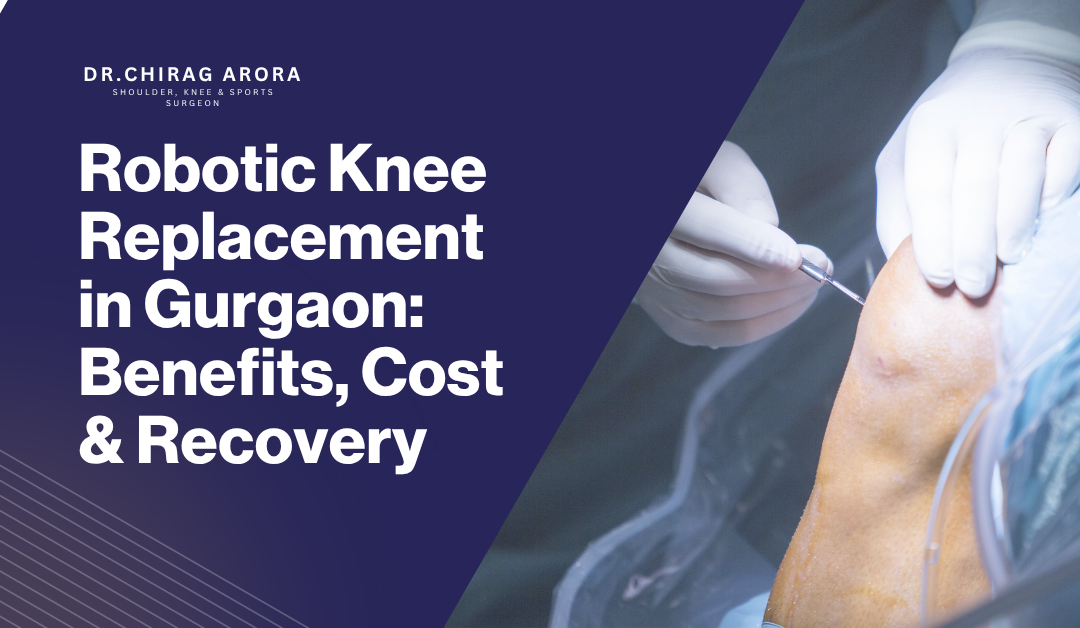
Robotic Knee Replacement in Gurgaon: Benefits, Cost & Recovery

Robotic Knee Replacement in Gurgaon: Benefits, Cost & Recovery

: BENEFITS, COST AND RECOVERY

If you have knee pain, Robotic Knee Replacement in Gurgaon is a good option for you. This knee pain can make it really hard for you to do things like walking, climbing stairs, sitting or even sleeping. For people who have arthritis or damaged knee joints, Robotic Knee Replacement in Gurgaon is one of the best ways to treat the problem.

Orthopedic Doctors in Gurgaon like are using the latest technology and taking good care of patients to help them get back on their feet, reduce knee pain and get back to their normal life faster than with old surgery methods.

What is Robotic Knee Replacement in Gurgaon?

    Robotic Knee Replacement in Gurgaon is a way of doing where a robotic system helps the doctor do the surgery accurately. It does not mean that a robot does the surgery by itself, instead it helps the doctor plan the surgery in 3D before the operation, make cuts on the bone, put the implant in place and save the healthy bone and tissue. This makes the joint work better and lasts longer.

    Why do people always prefer Gurgaon for knee replacement surgery?

        People choose Gurgaon for knee replacement surgery because Gurgaon has become a healthcare hub in India. It has the latest hospitals with robotic systems and experienced doctors who specialize in bones and quality care for patients from other countries. The cost of Robotic Knee Replacement in Gurgaon is not too high compared to other countries.

        Benefits of Robotic Knee Replacement in Gurgaon

        Here are some of the benefits of Robotic Knee Replacement in Gurgaon:

        •  The surgery is very precise which means the implant fits well and the joint works better.
        •  There is lesser knee pain after surgery because the tissues are handled carefully.
        •  People can start walking within 24 to 48 hours after surgery.
        •  The cut on the skin is smaller which means less tissue damage and less scarring.
        •  The implant lasts longer because it is placed in the right position.
        •  There is a low chance of complications like infection or implant loosening.
        •  People can move their knees naturally again.

        Who needs Robotic Knee Replacement in Gurgaon?

          You may need knee replacement if you have arthritis, rheumatoid arthritis, damage to the knee from an accident or knee pain that does not go away with medicine. Top Orthopedic Doctors in Gurgaon like Dr. Chirag Arora check each patient carefully before deciding if surgery is needed.

          Steps of the Surgery

            Here are the steps of Robotic Knee Replacement in Gurgaon:

            Step 1: The doctor plans the surgery using an image of the knee.

            Step 2: The robotic system makes a map of the joint.

            Step 3: The doctor performs the surgery with assistance.

            Step 4: The implant is placed in the position.

            Step 5: Physiotherapy starts within 24 hours.

            Recovery After Robotic Knee Replacement in Gurgaon

            First Week: Patients walk with support, take pain medicine and start physiotherapy.

            2 To 6 Weeks: Walking improves, stiffness reduces and patients slowly return to activities.

            6 To 12 Weeks: Patients move freely and perform most daily activities comfortably.

            The recovery time depends on age, fitness level. How well physiotherapy is followed.

            Cost of Robotic Knee Replacement in Gurgaon

            The cost of Robotic Knee Replacement in Gurgaon depends on the hospital, implant type, surgeon’s experience and robotic technology used. On average it may be moderate to high compared to surgery but the long-term benefits often make it worthwhile. Patients should consult experts like Dr. Chirag Arora, best knee replacement in Gurgaon, to understand the cost based on their condition.

            Why patients choose Dr. Chirag Arora

            Choosing the doctor for knee replacement is one of the most important decisions you will make. Here is why many patients trust Dr. Chirag Arora for knee replacement in Gurgaon:

            1. Expertise in Robotic Knee Replacement

            Dr. Chirag Arora is experienced in doing knee replacement surgery. He uses machines to make sure the surgery is very precise and the implant is put in the right place. Dr. Chirag Arora wants every patient to have the result they can get.

            1. Personalized Treatment Plans

            Every patient has a knee problem. Dr. Chirag Arora checks the patient carefully before deciding if they need surgery. He makes a plan that’s just for that patient based on how old they are what they like to do how bad their arthritis is and how healthy they are.

            1. Advanced Robotic Technology

            Dr. Chirag Arora makes a detailed plan before the surgery to make sure the implant is put in the right place. The robotic machine helps him be very precise during the surgery. Dr. Chirag Arora tries to save the bone and the tissue around it when he can.

            1. Patient-Centered Care

            Dr. Chirag Arora takes the time to understand what is worrying each patient. He explains the surgery, how to recover and what to expect in a way that’s easy to understand. Dr. Chirag Arora wants his patients to feel confident when they make decisions about their care.

            1. Focus on Faster Recovery

            Dr. Chirag Arora gets his patients moving after the surgery. He gives them instructions on how to do physiotherapy. Dr. Chirag Arora checks on his patients all the time to see how they are healing and to make sure they are making progress.

            1. Comprehensive Care Under One Roof

            Dr. Chirag Arora checks his patients carefully before the surgery. He does the surgery with the advanced machines. Dr. Chirag Arora makes a plan to help his patients get better. He also checks on them after the surgery to make sure their joint is healthy, for a time.

            Life after surgery

            After Robotic Knee Replacement in Gurgaon patients can walk without pain, climb stairs easily, do light exercise and enjoy a better quality of life. They also reduce dependence on painkillers. Regular physiotherapy and exercise are very important to maintain results.

            Risks of Robotic Knee Replacement in Gurgaon

            Knee replacement is generally safe but like any surgery it may have small risks such as mild swelling, temporary stiffness, infection or blood clots. These risks are very low when performed by experienced surgeons, like Dr. Chirag Arora.

            Conclusion

            Robotic Knee Replacement in Gurgaon is an option for people who have really bad knee pain and arthritis because it helps them get better fast. They can move around more easily. Doctors like Dr. Chirag Arora use machines to do the operation so it is very accurate. This means that people who have Robotic Knee Replacement in Gurgaon can start doing things they like again without feeling a lot of pain. They can get back to a life and that is a really good thing for patients who have Robotic Knee Replacement, in Gurgaon.

            Frequently Asked Questions

            Q1. Is robotic knee replacement better than traditional surgery?

            Yes, it offers better precision, faster recovery, and improved long-term outcomes.

            Q2. How long does robotic knee replacement take?

            Usually 1.5 to 2.5 hours depending on complexity.

            Q3. When can I walk after robotic knee replacement?

            Most patients start walking within 24–48 hours.

            Q4. Is robotic surgery safe for elderly patients?

            Yes, it is safe and often recommended for elderly patients with arthritis.

            Q5. How long does the knee implant last?

            Typically 15–20 years or more with proper care.

            Q6. Will I feel pain after Robotic Knee Replacement surgery?

            Mild pain is expected, but it is well managed with medication.

            Q7. How long does a knee replacement implant last?

            Modern knee implants typically last 15–20 years or longer, depending on the patient’s lifestyle, weight, and overall health.

            Q8. Why choose Dr. Chirag Arora for Robotic Knee Replacement in Gurgaon?

            Dr. Chirag Arora offers advanced robotic-assisted surgery, personalized treatment plans, comprehensive rehabilitation, and patient-focused care for the best possible outcomes

            Q9. Are there any risks involved?

            Like any surgery, there are small risks such as infection, swelling, stiffness, or blood clots. These risks are minimized with experienced surgical care and proper rehabilitation.

            Q10. How do I book an appointment with Dr. Chirag Arora?

            You can book an appointment with Dr. Chirag Arora, , at Nirvana Clinic or at Fortis Hospital.

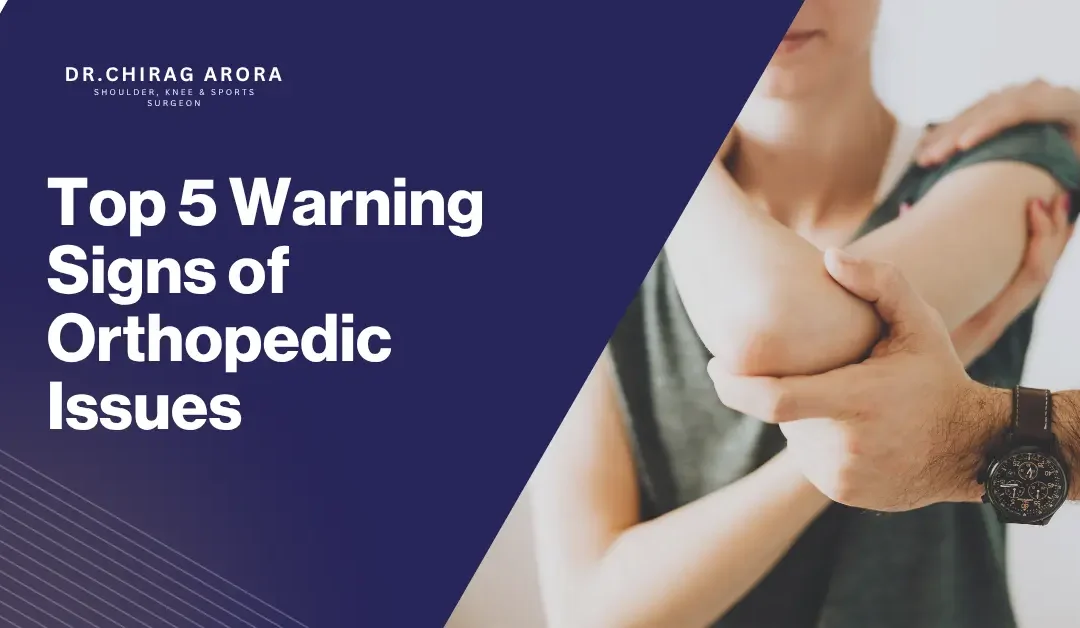
            Top 5 Warning Signs of Orthopedic Issues

            Top 5 Warning Signs of Orthopedic Issues

            Our bones, joints, muscles, ligaments, and tendons all work together to help us move comfortably and perform everyday activities. Many people ignore the early signs of , thinking the pain or discomfort will go away on its own. The truth is that identifying orthopedic issues early can help prevent complications, reduce pain, and maintain mobility.

            Dr. Chirag Arora, , emphasizes that timely diagnosis and treatment can make a significant difference. Whether you are an athlete, a working professional, or an older adult, paying attention to warning signs can help you seek treatment before the condition worsens. In this blog, we will discuss the top 5 warning signs of orthopedic issues and why they should never be ignored.

            1. Persistent Joint Pain

            It is normal to experience some soreness after exercise or physical activity. However, if the pain lasts for weeks or keeps returning, it may be a sign of an underlying orthopedic problem. Joint pain can affect the knees, hips, shoulders, ankles, wrists, or elbows. It may occur due to arthritis, cartilage damage, ligament injuries, tendon problems, or joint degeneration.

            Signs to Watch For:
            • Pain lasting more than a few weeks
            • Pain that worsens with movement
            • Morning stiffness
            • Difficulty performing routine activities
            • Pain that interferes with sleep

            advises that persistent joint pain should never be ignored, especially when it affects daily life. Early consultation with a trusted can help identify the cause and prevent further joint damage.

            2. Swelling and Inflammation Around Joints

              Swelling is the body’s natural response to injury or inflammation. However, recurring or unexplained swelling around a joint may indicate an orthopedic condition that requires medical attention. Inflammation can occur due to arthritis, sports injuries, ligament tears, meniscus injuries, tendon inflammation, or joint infections.

              Symptoms Associated with Swelling:
              • Warmth around the joint
              • Redness
              • Tenderness
              • Restricted movement
              • Increasing pain

              Many people rely on home remedies or painkillers without addressing the underlying issue. Consulting an experienced orthopedic surgeon in Gurgaon, can help determine the exact cause and provide the appropriate treatment.

              3. Limited Range of Motion

              Have you noticed difficulty bending your knee, raising your arm, turning your neck, or climbing stairs? A limited range of motion is one of the most common warning signs of orthopedic issues. It often develops gradually and may be accompanied by pain, stiffness, or weakness.

              Common Causes:
              • Frozen shoulder
              • Osteoarthritis
              • Rotator cuff injuries
              • Ligament damage
              • Joint degeneration
              • Previous injuries

              When flexibility and movement become restricted, everyday activities such as dressing, driving, lifting objects, or exercising can become challenging.According to Dr. Chirag Arora, who is recognised as the best sports injury doctor in Gurgaon, early treatment can help restore mobility and prevent long-term stiffness. If movement restrictions persist, it is important to seek orthopedic evaluation.

              4. Frequent Back and Neck Pain

              Back pain and neck pain have become increasingly common due to prolonged sitting, poor posture, and lack of physical activity.While occasional discomfort may not be serious, recurring pain should be evaluated by a  bone specialist near you.

              Warning Symptoms Include:
              • Pain lasting more than a few weeks
              • Pain radiating to the arms or legs
              • Numbness or tingling sensations
              • Muscle weakness
              • Difficulty standing or walking

              These symptoms may indicate:

                • Herniated discs
                • Spinal stenosis
                • Degenerative disc disease
                • Sciatica
                • Spinal alignment problems

              5. Weakness, Instability, or Difficulty Walking

              Many orthopedic conditions affect balance, stability, and muscle strength. You may feel as though your knee is giving way, your ankle is unstable, or walking has become difficult.

              Common Signs:
              • Frequent falls
              • Difficulty climbing stairs
              • Knee buckling
              • Unsteady walking
              • Muscle weakness
              • Loss of balance

              These symptoms may result from:

              • Ligament injuries
              • Arthritis
              • Nerve compression
              • Muscle disorders
              • Joint degeneration

              Ignoring these warning signs can increase the risk of serious injuries and fractures.

              Why Early Diagnosis Matters

              Many orthopedic conditions progress gradually. What starts as mild discomfort can eventually become severe pain, limited mobility, or permanent joint damage.

              Benefits of early diagnosis include:

              • Faster recovery
              • Less invasive treatment options
              • Reduced pain and discomfort
              • Better mobility
              • Prevention of long-term complications
              • Improved quality of life

              Visiting an orthopedic doctor in Gurgaon as soon as symptoms appear can help identify the problem early and create an effective treatment plan.

                When Should You See an Orthopedic Specialist?

                You should consult an orthopedic specialist if you experience:

                • Persistent joint pain
                • Swelling that does not improve
                • Difficulty moving a joint
                • Frequent back or neck pain
                • Numbness or tingling
                • Muscle weakness
                • Difficulty walking
                • Sports-related injuries
                • Pain affecting daily activities

                Seeking medical care at the right time can significantly improve treatment outcomes.

                  How Dr. Chirag Arora Helps Patients

                  Dr. Chirag provides comprehensive orthopedic care focused on accurate diagnosis, personalized treatment, and long-term recovery. As an experienced orthopedic doctor in Gurgaon, he treats a wide range of conditions, including arthritis, sports injuries, ligament tears, fractures, spine disorders, and joint problems.

                  Patients benefit from evidence-based treatment plans designed to restore mobility, reduce pain, and improve overall function. Whether treatment involves medication, physiotherapy, minimally invasive procedures, or surgery, Dr. Chirag develops a customized approach for every patient.

                  If you are looking for a trusted orthopedic doctor in Gurgaon, consulting Dr. Chirag Arora can help address orthopedic concerns before they become more serious.

                  Conclusion

                  Orthopedic problems rarely develop overnight. They often begin with symptoms such as persistent pain, swelling, stiffness, limited movement, back pain, or instability. Recognizing these warning signs early can help prevent complications and improve treatment outcomes.

                  If you are experiencing any of these symptoms, do not wait for them to worsen. Consult Dr. Chirag Arora, orthopedic specialist in Gurgaon, for timely diagnosis and effective treatment that can help you return to an active and pain-free life. This way we can go back to living a pain-free life.

                  Frequently Asked Questions

                  Q1. What are the early warning signs of orthopedic problems?

                  Persistent pain, swelling, stiffness, reduced mobility, back pain, and difficulty walking are common early warning signs of orthopedic issues.

                  Q2. When should I consult a doctor for joint pain?

                  You should consult an expert orthopedic doctor like Dr. Chirag Arora if your joint pain lasts more than a few weeks, keeps recurring, or affects your daily activities.

                  Q3. Can swelling around a joint indicate a serious orthopedic condition?

                  Yes. Persistent swelling may indicate arthritis, ligament injuries, tendon problems, or other orthopedic conditions requiring medical evaluation.

                  Q4. Why is limited range of motion considered a warning sign?

                  Difficulty moving a joint may indicate arthritis, frozen shoulder, ligament damage, or other orthopedic disorders that need treatment.

                  Q5. Is chronic back pain an orthopedic issue?

                  Yes. Chronic back pain can result from spinal conditions such as herniated discs, sciatica, degenerative disc disease, or spinal stenosis.

                  Q6. What causes weakness or instability while walking?

                  Weakness and instability can be caused by arthritis, ligament injuries, muscle weakness, nerve compression, or joint degeneration.

                  Q7. How can an orthopedic doctor in Gurgaon diagnose orthopedic conditions?

                  An orthopedic specialist may use physical examinations, imaging tests, X-rays, MRI scans, and medical history evaluation to diagnose the condition.

                  Q8. Can orthopedic issues be treated without surgery?

                  Many orthopedic conditions can be managed through medications, physiotherapy, lifestyle modifications, injections, and minimally invasive treatments.

                  Q9. Why choose Dr. Chirag Arora for orthopedic treatment in Gurgaon?

                  Dr. Chirag Arora provides comprehensive orthopedic care with personalized treatment plans focused on pain relief, mobility restoration, and long-term recovery.

                  Q10. How do I book an appointment with Dr. Chirag Arora?

                  You can book an appointment with Dr. Chirag Arora, orthopedic doctor in Gurgaon, at Nirvana Clinic or at Fortis Hospital.
                  Dr. Chirag Arora, orthopedic doctor in Gurgaon, dr chirag arora, best orthopedic doctor in Gurgaon, orthopedic specialist Gurgaon, joint pain treatment Gurgaon, knee pain specialist Gurgaon, orthopedic surgeon Gurgaon, arthritis treatment Gurgaon, sports injury treatment Gurgaon, back pain treatment Gurgaon, neck pain specialist Gurgaon, shoulder pain treatment Gurgaon, ligament injury treatment Gurgaon, orthopedic clinic Gurgaon, joint replacement surgeon Gurgaon, bone and joint specialist Gurgaon, orthopedic care Gurgaon, knee arthritis treatment Gurgaon, orthopedic consultation Gurgaon, orthopedic problems, warning signs of orthopedic issues, chronic joint pain, orthopedic treatment Gurgaon, musculoskeletal disorders