

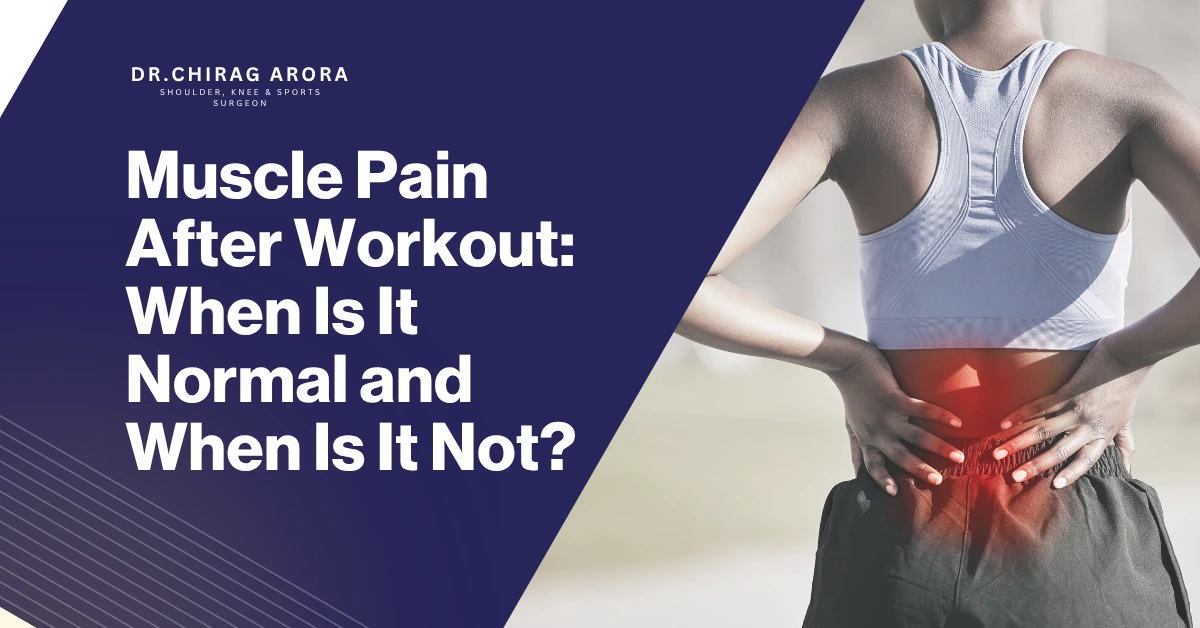
MUSCLE PAIN AFTER WORKOUT: WHEN IT IS NORMAL AND WHEN IT IS NOT
If you’ve ever done a new or tough workout, you’re probably not a stranger to sore muscles that hit you afterward. Maybe you were achy before you even left the gym. Or maybe you felt great after your workout but couldn’t lift your arms above your head by the time you got out of bed the next day. Both scenarios are normal. Dr. Chirag Arora, Best Orthopedic Doctor in Gurgaon, explains that muscle pain after workouts is very common when you start a workout routine or push your body harder than normal. This muscle pain can be normal or not normal. Normal muscle pain helps muscles grow stronger. Not normal muscle pain can mean injury.
Mild soreness is common. It is part of exercise and fitness progress. Sometimes, workout pain can mean something serious, you must understand the difference. This helps in preventing injuries and keeps your fitness journey healthy.Whether you are new to workouts or a gym enthusiast, knowing when post-workout muscle pain is normal and when to seek advice helps protect your muscles and joints.
What Causes Muscle Pain After a Workout?
Muscle pain after exercise happens because your muscles get torn during activity; this is normal. It allows muscles to get stronger during recovery. The common cause of soreness is Delayed Onset Muscle Soreness or muscle pain after a workout, which is also known as DOMS. DOMS begins 12 to 24 hours after exercise. It may last for 3 to 5 days.
Common Causes of Workout Muscle Soreness
- High-intensity workouts
- Weight training
- Jumping exercises
- New workout routines
- Overtraining
- Warm-up or stretching
- Incorrect exercise form
Mild muscle soreness after workout sessions is typically normal. It is transitory.
Signs of Normal Muscle Pain After a Workout
Post-workout soreness feels manageable. It gets better with time. Here are signs that your muscle pain is likely normal:
- Mild to Moderate Soreness
Muscles may feel tender, stiff, or mildly painful. This is especially true when moving.
- Pain in Both Sides of the Body
If both legs or both arms feel equally sore after exercise, it is usually a sign of workout recovery.
- Pain Starts After Several Hours
DOMS generally develops an hour after exercise. It does not start away.
- Pain Improves Gradually
Normal muscle soreness reduces within a day; rest and hydration help.
- Muscle Tightness Without Swelling
You may feel stiffness. Usually, there is no swelling or bruising
When Is Muscle Pain After a Workout Not Normal?
Muscle soreness after exercise can sometimes be a sign of muscle damage or serious strain. Ignoring pain from exercise can make the problem worse.
These are the red flags that muscle soreness post-exercise is abnormal:
- Sudden or Sharp Pain
Most of the time, a sudden stab during exercise indicates that you may have a muscle tear or ligament strain.
- Severe Swelling or Bruising
Swelling, redness, or bruising are not signs of exercise-induced soreness.
- Pain Taking Longer Than a Week
A normal muscle soreness will usually get better in a day. But did that workout cause pain that persists for several weeks, or months even, may warrant investigation.
- Difficulty Walking or Moving
Muscle Pain Analysis: If Your Body Is Affected By Muscle Pain That Limits Activities Or Movement It Is Reckoned An Injury.
- Joint Pain Along With Muscle Pain
Pain inside the knee, shoulder, elbow, or ankle joint is different from muscle soreness. It may indicate damage.
- Weakness or Numbness
Numbness, tingling, or muscle weakness after exercise should never be ignored.
- Dark Urine
Severe muscle breakdown called rhabdomyolysis can cause urine and extreme muscle pain. This is an emergency.
You also need to prepare for gradual onset muscle soreness, the most common type of post-workout soreness. It’s likened to mild stiffness or tenderness in your muscles. It commonly affects both sides of the body equally. It improves within a day. It does not significantly limit movement.
Normal Muscle Soreness Vs Muscle) Injury
On the other hand, a muscle injury often causes sudden, sharp, or severe pain. The pain may be localized to one area. It may be associated with swelling, bruising, weakness or trouble moving the muscle or joint. Knowing this difference will help you determine when to rest and when to see a doctor, as also highlighted by Dr. Chirag Arora, Best Orthopedic Doctor in Gurgaon. If your soreness is normal, these simple recovery tips may help relieve discomfort:
- Rest properly.
Allow muscles time to recover between workouts.
- Stay Hydrated.
Getting enough water helps muscle recovery. It reduces cramps.
- Use Ice or Heat Therapy
Ice packs help reduce inflammation. Heat relaxes muscles.
- Gentle Stretching
Light stretching improves flexibility. It reduces stiffness.
- Eat Protein-Rich Foods
Protein helps rebuild and recover muscles after exercise.
- Get Sleep
Most muscle recovery occurs during sleep.
- Avoid Overtraining
Provide your muscles with time to recover in between exercises.
- Top Foods For Recovery After Exercise
- Eggs
- Chicken
- Fish
- Yogurt
- Bananas
- Nuts and seeds
- Vegetables
- Fruits with antioxidants
Eating correctly allows your muscles to recover faster. It also adds to your stamina, which will help you work out better.
How to Avoid Post-Exercise Muscle Pain?
You will never be completely free of soreness, but these tips can help you mitigate it.
When Should You See an Orthopedic Doctor in Gurgaon?
You should consult a specialist or sports injury doctor in Gurgaon, like Dr. Chirag Arora, if you experience:
- Muscle pain after a workout
- Pain lasting longer than 7 days
- Swelling or bruising
- Difficulty moving limbs
- Joint instability
- Recurrent muscle injuries
- Tingling
- Fever along with muscle pain
Diagnosis helps prevent long-term complications. It supports recovery.
Importance of Recovery in Fitness
Many people believe that intense exercise every day leads to fitness results. However, muscle recovery is equally important. Overtraining without rest may increase the risk of injuries, chronic pain, and fatigue.
Replace those essentials, balanced exercise, nutrition, hydration, and sleep are crucial for muscle recovery. They encourage long-term fitness success. Muscle soreness after exercise is often a sign that your body is responding to exercise. However, mild muscle soreness and stiffness after exercise tend to improve with rest and recovery. However, severe pain, swelling, weakness, or lasting symptoms may indicate a muscle injury or joint problem. It needs attention.
Listen to your body, and that is the key to fitness progress. If your pain feels unusual, does not improve, consult an orthopedic doctor like Dr. Chirag Arora. This helps avoid complications and return to exercise safely.
Conclusion
Muscle pain after a workout is a natural part of the body’s adaptation to exercise, especially when you begin a new fitness routine or increase workout intensity. Mild soreness, known as DOMS, is usually normal and indicates that your muscles are repairing and becoming stronger. It typically appears after a few hours, affects both sides of the body, and improves within a few days with proper rest, hydration, and nutrition. However, not all pain should be ignored. Sudden sharp pain, swelling, bruising, weakness, joint discomfort, or pain lasting more than a week may indicate an injury that needs medical attention. Understanding the difference between normal soreness and harmful pain is essential for safe and effective fitness progress. Listening to your body, allowing adequate recovery, and seeking timely advice from an orthopedic specialist like Dr. Chirag Arora helps prevent complications and supports long-term muscle and joint health.
Frequently Asked Questions
Q1. Is muscle pain after a workout is normal?
Yes, mild muscle soreness after exercise is common. It is especially common after workouts or exercises.
Q2. How long does workout muscle soreness last?
Normal muscle soreness usually lasts between 3 and 5 days.
Q3. Should I exercise with muscle pain?
Light exercise and stretching may help. Avoid workouts if muscles are severely sore.
Q4. When should I worry about muscle pain after exercise?
Seek advice if pain is severe, sudden, associated with swelling, weakness, or lasts longer than a week.
Q5. What helps muscle recovery faster?
Proper hydration, protein diet, sleep, stretching and rest help muscles recover faster.
Q6. Can dehydration cause muscle pain?
Yes, dehydration may lead to muscle cramps, fatigue, and increased soreness after workouts.
Q7. Does your muscle pain occur during exercise?
No sudden sharp pain may indicate a muscle tear or injury. It should not be ignored.
Q8. How do I book an appointment with Dr. Chirag Arora?
You can book an appointment with Dr. Chirag Arora, orthopedic doctor in Gurgaon, at Nirvana Clinic or at Fortis Hospital.





0 Comments