

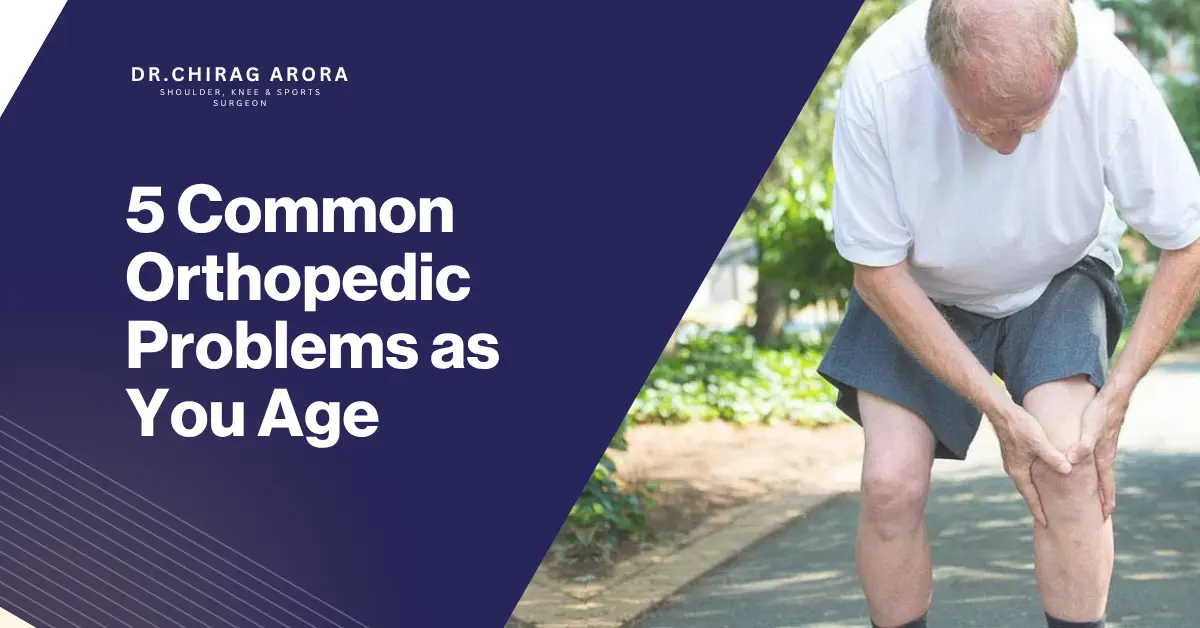
5 COMMON ORTHOPEDIC PROBLEMS AS YOU AGE
As we get older, our bodies change. Our bones, joints, muscles, and ligaments are all affected by aging. A lot of people start to feel stiffness or have trouble moving around after they turn 40 or 50. According to Dr. Chirag Arora, best orthopedic surgeon in Gurgaon, while it is normal to feel a little uncomfortable as we age, we should never ignore pain that does not go away.
Orthopedic problems can really affect our lives. They can make it hard to walk, climb stairs, lift things, or even sleep comfortably. The good news is that if we find out what is wrong early and get the treatment, we can stay active and pain-free for a long time.
5 Common Orthopedic Problems:
- Osteoarthritis (Wear and Tear of Joints)
Osteoarthritis is a common problem with joints that older adults get. It happens when the cartilage that protects our bones wears down over time.
Symptoms of osteoarthritis include:
- Joint pain in the knees, hips, and hands
- Feeling stiff in the morning
- Swelling in the joints
- Trouble moving
Causes of osteoarthritis are:
- Getting older
- Using our joints too much
- Being overweight
- Hurting our joints in the past
Treatment for Osteoarthritis:
- Watch our weight
- Do physiotherapy
- Take medicine to relieve pain
In some cases, we can even get a new joint. If we take care of osteoarthritis early, it can really help slow it down.
- Osteoporosis (Weak Bones)
Osteoporosis makes our bones weak. This means we can break them easily even if we just fall down or get hurt.
Symptoms of Osteoporosis include:
- Breaking bones a lot
- Having back pain
- Getting shorter over time
- Having posture
Causes of Osteoporosis are:
- Not having enough calcium and vitamin D
- Hormonal changes, especially in women after menopause
- Not being active
- Getting older
Treatment of Osteoporosis we can:
- Take calcium and vitamin D supplements
- Do exercises that make our bones stronger
- Take medicine to make our bones stronger
- Change our lifestyle
Osteoporosis is sometimes called a “silent disease” because we do not know we have it until we break a bone.
- Cervical Spondylosis (Neck Pain)
Cervical spondylosis is when the bones and discs in our neck wear down as we age.
Symptoms of spondylosis include:
- Having a stiff neck
- Getting headaches, especially at the back of our head
- Having pain in our shoulders
- Feeling tingling in our arms or hands
Causes of spondylosis are:
- Using screens for too long
- Having bad posture
- Our spinal discs are getting older
Treatment of Cervical Spondylosis we can:
- Do neck exercises
- Do physiotherapy
- Take medicine to relieve pain
Change how we live and work to reduce strain on our neck. If we sit up straight while we work or use our phones it can really help reduce the symptoms.
- Knee Pain & Degenerative Joint Disease
Knee problems are very common as we age, especially because the cartilage in our knees wears down.
Symptoms of Knee Problems include:
- Having pain when we walk or climb stairs
- Having swollen knees
- Hearing a cracking sound in our joints
- Having trouble standing for a time
Causes of Knee Problems are:
- Getting older and wearing down our joints
- Being overweight
- Hurting our knees in the past
- Not having strong muscles
To treat Knee Problems we can:
- Do physiotherapy and exercises to strengthen our muscles
- Use knee braces
- Lose weight
In cases, we may also have to get knee replacement surgery. If we have strong thigh muscles it can really help support our knees and reduce pain.
- Lower Back Pain (Lumbar Spondylosis / Disc Problems)
Lower back pain is one of the common orthopedic problems that adults have.
Symptoms of Back Pain include:
- Having constant or recurring back pain
- Having pain when we bend or lift things
- Having a stiff lower back
- Having pain that goes down our legs
Causes of lower back pain are:
- Having spinal discs that are worn out or slipped
- Having bad posture
- Having weak core muscles
- Sitting for too long
To treat lower back pain we can:
- Do physiotherapy
- Do exercises to strengthen our core muscles
- Manage our pain
- Change our lifestyle
If we ignore back pain, it can lead to big problems with moving around.
How to Protect Your Bones and Joints as You Age
There are simple things we can do to make a big difference:
- We should stay active like walking, doing yoga or swimming
- We should keep a healthy weight
- We should eat foods that’re rich in calcium like milk and leafy vegetables
- We should get enough vitamin D from the sun
- We should not sit for too long
- We should sit up straight
It is always better to prevent problems than to treat them when it comes to our bone health.
When Should You See an Orthopedic Doctor in Gurgaon?
We should go see a specialist if we have:
- Pain in our joints or bones that does not go away
- Trouble walking or moving around
- Swollen joints
- Broken bones a lot
- Pain that does not get better with rest
If we get treatment early, it can prevent problems and help us have a better life.
Conclusion
As we age, orthopedic problems like joint pain, weak bones, neck pain, knee problems, and back pain become more common. These conditions can affect our daily life and make simple activities difficult. However, with early diagnosis, proper treatment, regular exercise, healthy eating, and lifestyle changes, many orthopedic problems can be managed successfully. According to Dr. Chirag Arora, best orthopedic surgeon in Gurgaon, paying attention to early symptoms and seeking medical advice on time can help people stay active, mobile, and independent for many years.
Frequently Asked Questions
Q1. What causes most orthopedic problems?
Most orthopedic problems are caused by wear and tear of joints, injuries, poor posture, lack of exercise, and conditions like arthritis or osteoporosis.
Q2. When should I see an orthopedic doctor in Gurgaon?
You should see an orthopedic doctor if you have ongoing joint or bone pain, swelling, difficulty walking, or frequent fractures. Early treatment helps prevent complications.
Q3. Can orthopedic problems be prevented?
Yes, regular exercise, healthy eating, maintaining proper posture, and staying active can help reduce the risk of orthopedic problems.
Q4. What are the warning signs of osteoporosis?
Frequent fractures, back pain, reduced height, and poor posture can be signs of osteoporosis.
Q5. Is knee pain a normal part of aging?
Mild discomfort can happen with age, but ongoing knee pain should not be ignored and may need medical treatment.
Q6. When should I see an orthopedic doctor for back pain?
You should see a doctor if back pain lasts for weeks, spreads to the legs, or affects daily activities.
Q7. Can physiotherapy help orthopedic conditions?
Yes, physiotherapy can improve strength, flexibility, posture, and reduce pain in many orthopedic conditions.
Q8. Does being overweight affect joint health?
Yes, extra body weight puts more pressure on joints, especially the knees and hips, increasing pain and damage.
Q9. How can I keep my bones strong as I age?
Eating calcium-rich foods, getting enough vitamin D, exercising regularly, and avoiding smoking and alcohol can help keep bones strong.
You can book an appointment with Dr. Chirag Arora, orthopedic doctor in Gurgaon, at Nirvana Clinic or at Fortis Hospital.

0 Comments