

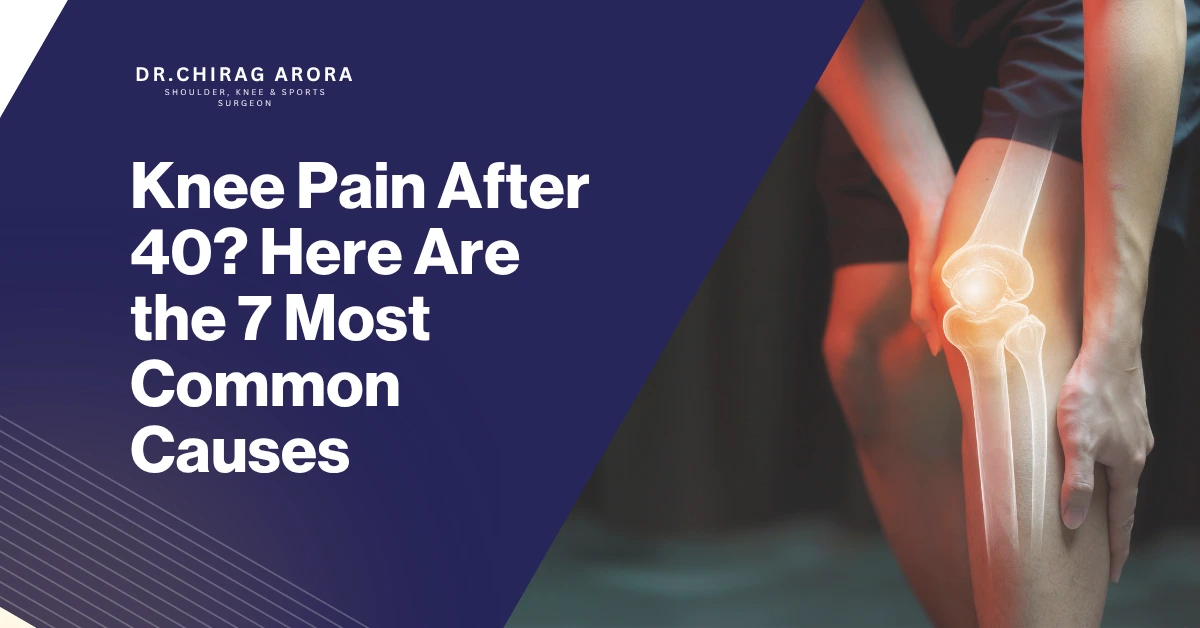
KNEE PAIN AFTER 40? HERE ARE THE 7 MOST COMMON CAUSES
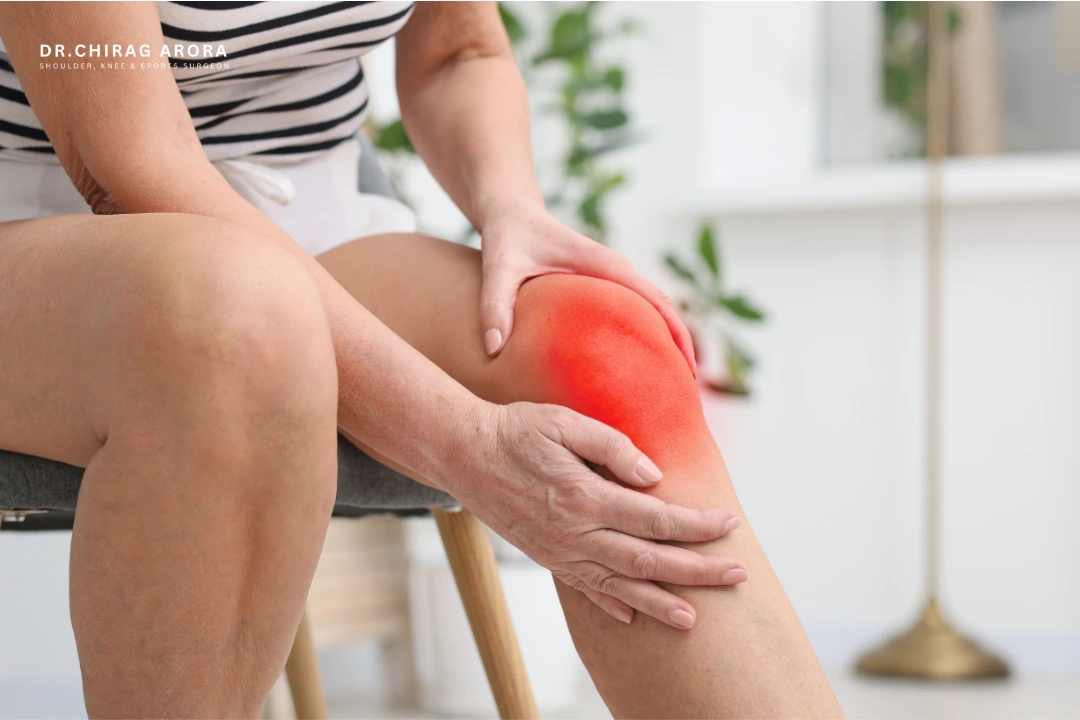
Knee pain is an issue that most people experience after they turn 40. You might feel knee pain when you are climbing stairs, getting up from a chair or walking for a long time. Some people have knee pain in the morning while others experience swelling or pain after they exercise.
Knee pain can be caused by changes in your body as you get older. These changes can affect the cartilage, muscles, tendons and ligaments that support your knee. However it is not your age that can cause knee pain. Other factors like injuries, your weight, your job, how active you are and weak muscles can also contribute to knee problems.
Dr. Chirag Arora help you understand what is causing your knee pain because different knee conditions require different treatments.
Seven Common Causes of Knee Pain after 40.
- Knee Osteoarthritis
Knee osteoarthritis is a very common reason for knee pain in people over 40. It happens when the cartilage that covers the ends of your bones wears down over time.
You might feel pain in your knee after you walk for a long time, climb stairs or exercise. As the condition gets worse you might experience stiffness in the morning, swelling, movement or a grinding sensation in your knee.
The treatment for knee osteoarthritis depends on how much the cartilage is damaged and what your symptoms are. Your doctor might recommend that you lose weight, do physiotherapy, change your activities, take medicine or get injections. In some cases, you also might need to have knee replacement surgery.
- Degenerative Meniscus Tear
The meniscus is a piece of cartilage that acts as a shock absorber in your knee. When you are younger, meniscus tears often happen during sports. As you get older the meniscus can become less flexible and tear when you make movements like squatting or twisting.
A degenerative meniscus tear can cause pain, swelling, clicking or a catching sensation in your knee. You might feel like your knee is locking or giving way.
Not all meniscus tears need surgery. The treatment will depend on your symptoms and the type of tear. You might need to rest, take medicine, do physiotherapy or have knee arthroscopy.
- Patellofemoral Pain Syndrome
Patellofemoral pain syndrome causes pain around or behind your kneecap. It is often called runner’s knee but you do not have to be a runner to get it.
The pain can get worse when you climb stairs, squat, kneel or sit with your knees bent for a time. Weak muscles in your thighs or hips, kneecap tracking, sudden changes in your activities and repetitive stress can all contribute to this condition.
Exercise can help strengthen the muscles that support your knee and improve the movement of your kneecap. You might also need to change your footwear, posture or exercise technique.
- Tendinitis
Tendons connect your muscles to your bones. Repeated stress can cause inflammation or damage to the tendons around your knee.
Tendinitis can happen when you suddenly increase your exercise, run on surfaces, jump frequently or do repeated squats. You might feel pain at the front of your knee. It can get worse when you are active.
To treat tendinitis you should rest, do physiotherapy and gradually strengthen your muscles. If you continue to exercise you can make the stress on your tendon worse.
- Knee Bursitis
Bursae are sacs that reduce friction around your joints. When a bursa becomes irritated or inflamed it can cause knee pain, tenderness and swelling.
Prepatellar bursitis causes swelling in front of your kneecap. It is more common in people who kneel frequently. Pes anserine bursitis causes pain on the side of your knee and may be related to repetitive activity, osteoarthritis or tight muscles.
The treatment for knee bursitis usually includes changing your activities, taking medicine and doing physiotherapy.
- Old Ligament or Sports Injuries
If you had a ligament injury in the past it can still affect your knee years later. You might have gone back to your activities without fully restoring your muscle strength or joint stability.
Over time your knee might feel unstable, painful or weak. It can give way when you turn, walk on surfaces or change direction. An untreated ligament injury can also put pressure on your cartilage and meniscus.
If you have knee pain and you had a sports injury in the past you should see Dr. Chirag Arora, Best Orthopedic Surgeon In Gurgaon. They can check your stability, muscle strength and movement. The treatment might include rehabilitation, bracing or surgery.
- Pain Referred From the Hip or Lower Back
Not all knee pain starts in the knee joint. Problems with your hip, lower or nerves can cause pain that travels to your thigh or knee.
You might suspect referred pain if your knee imaging looks normal or if you have pain, hip stiffness, numbness or tingling. It is essential to have an orthopedic examination to find the actual source of your pain.
The treatment should focus on the source of your pain. If you only treat your knee you might not get relief if the problem is in your hip or spine.
When Should You See an Orthopedic Specialist?
You should see a doctor if your knee pain lasts for several weeks, keeps coming back or limits your daily activities. You should also see a doctor if your knee swells frequently, locks give way or becomes difficult to bend.
If you cannot put weight on your leg, your knee is badly swollen or you have redness, warmth and fever you should seek care. These symptoms can indicate an injury or infection and require prompt assessment.
How Is Knee Pain Diagnosed?
The doctor will ask you where your pain is, when it started and what movements make it worse. They will examine your knee movement, alignment, swelling, tenderness, stability and muscle strength.
You might need an X-ray to check for arthritis, alignment problems or bone injuries. An MRI can help diagnose meniscus, ligament, tendon or cartilage problems. In some cases, you might need blood tests to check for inflammation or infection.
Conclusion
Knee pain after 40 isn’t something you have to accept as part of aging. Osteoarthritis, damage to the meniscus, problems with the kneecap, tendinitis, bursitis, previous injuries and referred pain are possible causes. Your treatment will depend on the cause of your knee pain and may include lifestyle changes, physiotherapy, medication, injections or surgery.
You can consult Dr. Chirag Arora, best orthopedic surgeon in Gurgaon for a personalized knee pain treatment plan. Dr. Chirag Arora treats arthritis, sports injuries, meniscus tears, ligament problems and other orthopedic conditions that affect knee movement.
Frequently Asked Questions
Q1. Is knee pain common after the age of 40?
Yes, knee pain can become more common after 40 because of cartilage changes, previous injuries, reduced muscle strength and repetitive joint stress.
Q2. What is the most common cause of knee pain after 40?
Knee osteoarthritis is a common cause, but meniscus tears, tendinitis, bursitis and kneecap problems may produce similar symptoms.
Q3. Why does my knee hurt while climbing stairs?
Pain on stairs may be related to patellofemoral pain syndrome, osteoarthritis, weak thigh muscles or irritation around the kneecap.
Q4. Can knee pain improve without surgery?
Yes. Many knee conditions can be managed with physiotherapy, activity modification, weight management, medicines or injections. Surgery is not always required.
Q5. Does being overweight cause knee pain?
Extra body weight can increase pressure on the knee joints and may worsen symptoms of osteoarthritis or other knee conditions.
Q6. Why does my knee click when I move it?
Painless clicking can be normal. Clicking accompanied by pain, swelling, locking or instability may be associated with a meniscus or cartilage problem.
Q7. Which test is best for knee pain?
The test depends on the suspected condition. X-rays are useful for bones and arthritis, while MRI can assess the meniscus, ligaments, cartilage and tendons.
Q8. When should I see an orthopedic doctor for knee pain?
See a doctor if pain lasts for several weeks, limits walking, causes repeated swelling or makes the knee lock or give way.
Q9. Who should I consult for knee pain treatment in Gurgaon?
You can consult Dr. Chirag Arora for an orthopedic assessment and treatment plan based on the cause and severity of your knee pain.
Q10. Who is the best doctor for knee pain in Gurgaon?
Dr. Chirag Arora is considered among the best orthopedic surgeons in Gurgaon. He treats knee arthritis, meniscus tears, ligament injuries, sports injuries, and other causes of knee pain.


0 Comments