Arthroscopy Vs Open Surgery: Which is Better for You?

Arthroscopy Vs Open Surgery: Which is Better for You?

ARTHROSCOPY VS OPEN SURGERY: WHICH IS BETTER FOR YOU?

When you have a knee, shoulder, ankle or any other joint problem, surgery may be the best way to restore movement and relieve pain. Many people get confused when they hear about two surgical options: arthroscopy and open surgery. People often ask questions like, “Which procedure is safer?”, “Will I recover faster?”, and “Which option will help me get back to my normal life sooner?”

Dr. Chirag Arora, a well-known orthopedic doctor in Gurgaon, says that both arthroscopy and open surgery have their own advantages. The right choice depends on the nature of the injury, the condition of the joint, and the patient’s individual needs.

In this blog by Dr. Chirag Arora, we will explain the differences between arthroscopy and open surgery in simple terms so that you can better understand your treatment options.

What Is Arthroscopy?

Arthroscopy is a minimally invasive surgical procedure that allows doctors to look inside a joint and treat the problem without making large cuts.

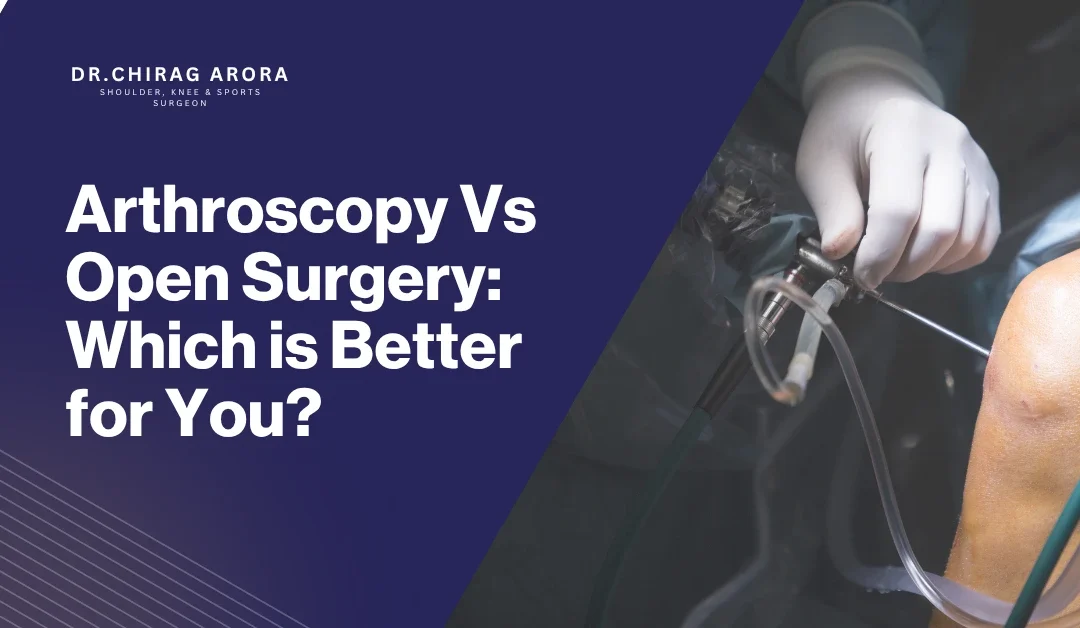
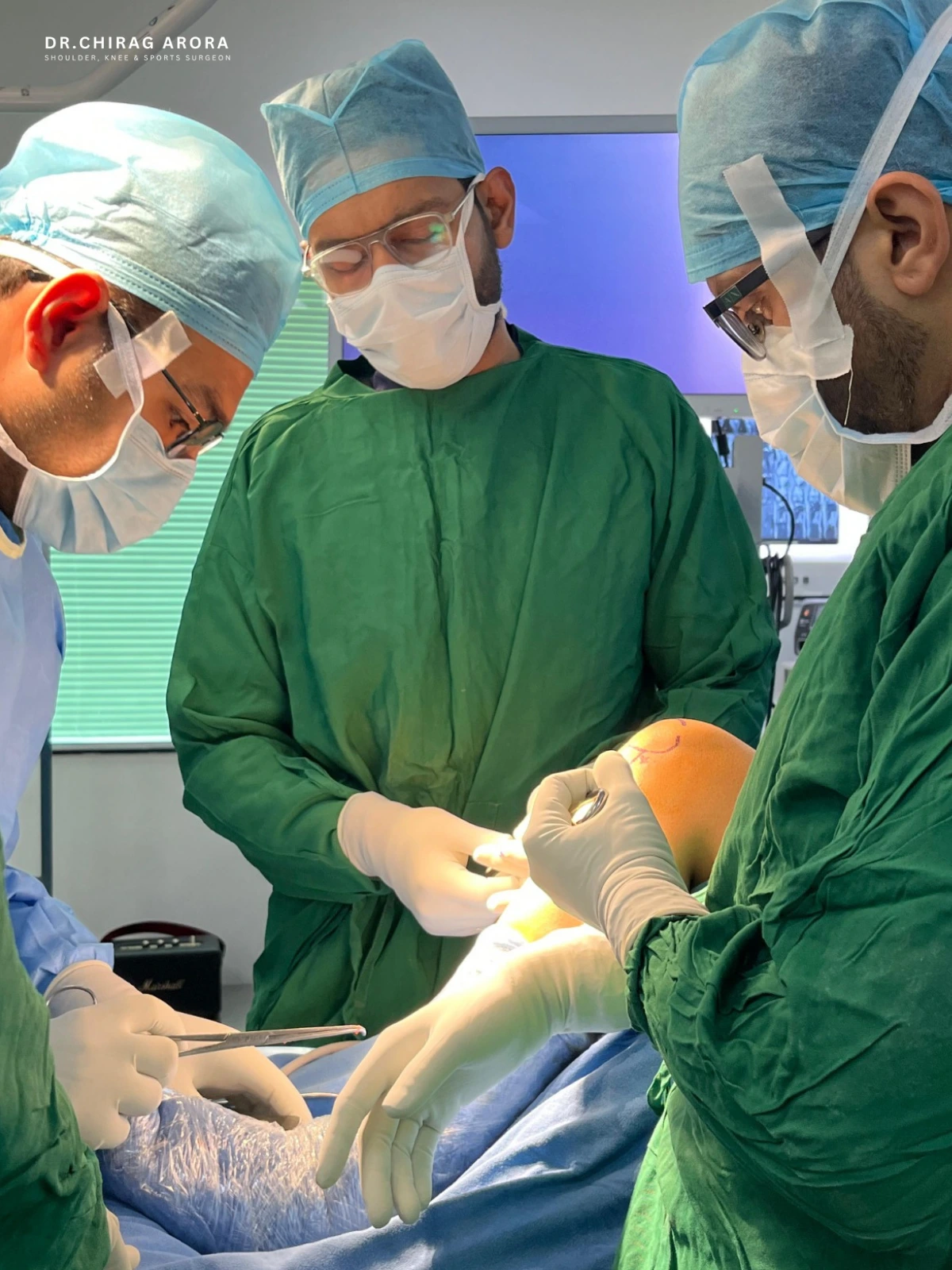
During the procedure, a tiny camera called an arthroscope is inserted through a small incision. The camera sends images to a screen, helping the surgeon clearly view the inside of the joint. Special instruments are then used through other small incisions to repair the damage.

Arthroscopy is commonly used for:

Because it requires only small incisions, arthroscopy has become a preferred treatment option for many orthopedic conditions.

What Is Open Surgery?

    Open surgery is the traditional surgical approach where the orthopedic surgeon makes a larger incision to directly access the affected area.

    This method provides a wider view of the joint, bone, or surrounding tissues, making it useful for treating more complex problems.

    Open surgery is often recommended for:

    • Complex fractures
    • Advanced arthritis
    • Severe tendon injuries
    • Joint replacement procedures
    • Bone deformities
    • Major ligament reconstructions

    As an experienced bone doctor in Gurgaon, Dr. Chirag Arora carefully evaluates each case before deciding whether open surgery is necessary.

    Arthroscopy Vs Open Surgery: The Main Differences

    Although both procedures aim to treat orthopedic conditions effectively, there are some important differences.

    One of the biggest differences is the size of the surgical cut. In arthroscopy, the incisions are very small, often less than a centimeter. In open surgery, a larger incision is needed to expose the affected area. Smaller incisions generally mean less scarring and faster healing. Arthroscopy causes less disturbance to muscles, ligaments, and surrounding tissues. Open surgery may require moving or cutting through tissues to reach the affected joint, which can increase healing time.

    Most patients recover faster after arthroscopy because the procedure is less invasive. With open surgery, recovery may take longer due to the larger incision and greater tissue involvement.

    Patients who undergo arthroscopy often report less pain after the procedure. Open surgery can involve more discomfort during the initial recovery period, although pain management techniques help make recovery easier.

    Many arthroscopic procedures are performed as day-care surgeries, allowing patients to return home the same day. Open surgeries may require a longer hospital stay depending on the complexity of the procedure.

    Why Many Patients Prefer Arthroscopy

    Over the last few decades, arthroscopy has transformed orthopedic care. Some of the major benefits include:

    • Faster return to daily activities
    • Less scarring
    • Reduced risk of infection
    • Better comfort during recovery

    According to Dr. Chirag Arora, arthroscopy doctor in Gurgaon, arthroscopy is particularly useful for athletes and active individuals who want to return to sports and daily activities as quickly as possible.

    When Open Surgery Is the Better Choice

    Despite the popularity of arthroscopy, open surgery remains an important and highly effective treatment option.

    There are situations where a surgeon needs direct access to the joint or bone to perform a successful repair.

    Open surgery may be the better choice when:

    • A fracture is severe or complicated
    • Arthritis has significantly damaged the joint
    • Joint replacement is required
    • Large tendon tears need extensive repair
    • Bone deformities must be corrected

    In such cases, open surgery often provides the best long-term outcome.

    Which Procedure Has Better Results?

    Many patients assume that arthroscopy is always better because it is less invasive. However, that is not necessarily true.

    The success of a surgery depends on choosing the right procedure for the right condition.

    For example:

    • An ACL tear can often be treated effectively with arthroscopy.
    • A knee replacement requires open surgery.
    • A simple meniscus tear may benefit from arthroscopic repair.
    • A complex fracture may require open surgical fixation.

    This is why consultation with an experienced specialist such as Dr. Chirag Arora, a trusted orthopedic doctor in Gurgaon, is essential.

      Recovery: What Can You Expect?

      Recovery After Arthroscopy

      Most patients experience:

      • Smaller wounds
      • Less swelling
      • Earlier physiotherapy
      • Faster return to work
      • Quicker return to sports

      Depending on the procedure, recovery may take a few weeks to a few months.

      Recovery After Open Surgery

      Recovery is usually longer and may include:

      • Extended rehabilitation
      • More intensive physiotherapy
      • Temporary movement restrictions
      • Longer healing time

      However, for many complex conditions, the long-term benefits make the recovery worthwhile.

        How Does Your Surgeon Decide?

        Choosing between arthroscopy and open surgery is not based on a single factor. Your surgeon will consider:

        • Your age
        • Activity level
        • Severity of injury
        • Overall health
        • Imaging results
        • Expected recovery goals
        • Long-term joint function

        A personalized treatment plan ensures that you receive the most appropriate care for your condition.

        Conclusion

        Both arthroscopy and open surgery play an important role in modern orthopedic treatment. Arthroscopy offers smaller incisions, less pain, and faster recovery, making it an excellent option for many joint injuries. Open surgery, on the other hand, remains the best option for treating complex orthopedic problems, severe fractures, and joint replacements.

        Rather than asking which procedure is better, the more important question is which procedure is best for your specific condition. A proper evaluation by Dr. Chirag Arora, orthopedic surgeon in Gurgaon, can help determine the most effective treatment plan and ensure the best possible outcome for your recovery.

        Frequently Asked Questions

        Q1. Is arthroscopy always better than open surgery?

        No. Arthroscopy is less invasive, but some conditions require open surgery for better results.

        Q2. Which surgery has a faster recovery?

        Arthroscopy generally offers a quicker recovery because it involves smaller incisions and less tissue damage.

        Q3. Can sports injuries be treated with arthroscopy?

        Yes. Many sports injuries, including ACL tears and meniscus injuries, are commonly treated through arthroscopy.

        Q4. Is arthroscopy painful?

        Most patients experience mild discomfort after arthroscopy, which is usually less than that associated with open surgery.

        Q5. Why would someone need open surgery?

        Open surgery may be necessary for severe fractures, joint replacements, advanced arthritis, and complex orthopedic conditions.

        Q6. How long will I stay in the hospital after the arthroscopy?

        Many arthroscopic procedures are performed as day-care surgeries, allowing patients to go home the same day.

        Q7.Does arthroscopy leave scars?

        Yes, but the scars are usually very small and less noticeable compared to open surgery.

        Q8. Can arthroscopy and open surgery both be successful?

        Absolutely. Both procedures have high success rates when performed for the appropriate condition.

        Q9. Why consult Dr. Chirag Arora for orthopedic treatment?

        Dr. Chirag Arora is a skilled orthopedic doctor in Gurgaon with expertise in arthroscopy, sports injury management, joint preservation, and advanced orthopedic care.

        Q10. How do I book an appointment with Dr. Chirag Arora?

        You can book an appointment with Dr. Chirag Arora, orthopedic doctor in Gurgaon, at Nirvana Clinic or at Fortis Hospital.
        Dr. Chirag Arora, orthopedic doctor in Gurgaon, dr chirag arora, arthroscopy vs open surgery, arthroscopy surgery, open surgery for joints, sports injury treatment Gurgaon, ACL tear treatment, meniscus tear surgery, knee arthroscopy, shoulder arthroscopy, ligament injury treatment, orthopedic specialist Gurgaon, minimally invasive orthopedic surgery, joint pain treatment Gurgaon, sports medicine doctor Gurgaon, cartilage repair surgery, knee injury specialist, shoulder injury treatment, best orthopedic doctor in Gurgaon
        Calcium vs Vitamin D: What Your Bones Really Need

        Calcium vs Vitamin D: What Your Bones Really Need

        CALCIUM VS VITAMIN D: WHAT YOUR BONES REALLY NEED

        When we talk about keeping our bones strong and healthy, we often think about calcium and vitamin D. Most people know these two things are important. They are not really sure what they do or which one is more important. The thing is, we need both calcium and vitamin D to work together. Let’s look at what calcium and vitamin D do for our bones.

        Bones are like living things that are always breaking down and building up. As we get older, especially after we turn 30, our bones start to get weaker. If we do not eat well, do not get sunlight and do not exercise, our bones can get even weaker. This can lead to problems like fractures and something called osteoporosis. Read this blog by Dr. Chirag Arora, best orthopedic in Gurgaon, to understand all about bone health and joint


        What is Calcium?

        Calcium is a type of mineral that helps build bones and teeth. Almost all of the calcium in our bodies is in our bones. It helps our bones be strong, and it also helps our muscles work, our nerves send signals, and our heart beat.

        Benefits of Eating Calcium:

        • It makes our bones and teeth strong
        • It helps our muscles work
        • It helps our blood clot
        • It helps our heart be healthy

        Calcium-Rich Foods

        • Milk and other dairy products
        • Green vegetables like spinach and kale
        • Almonds
        • Tofu
        • Foods that have extra calcium added to them

        What happens if we do not get enough calcium?

        If we do not get calcium, our bones can get weak, our muscles can cramp, we can get tired, and we might break our bones more easily. If we do not get calcium for a long time, we might get osteoporosis.

          How much calcium does our body need?

          Calcium amount required by our body:

          • Adults who are 19 to 50 years old need 1000 milligrams of calcium per day
          • Women who are over 50 need 1200 milligrams of calcium per day
          • Men who are over 70 need 1200 milligrams of calcium per day

            What is vitamin D?

            Vitamin D is sometimes called the sunshine vitamin because our body makes it when we are in the sun. Vitamin D does not make our bones strong by itself. It helps our body use calcium. If we do not get vitamin D, our bodies cannot use the calcium we eat.

              Benefits of Vitamin D:

              • It helps our body use calcium
              • It helps our immune system work
              • It helps our bones grow and get strong
              • It helps reduce inflammation

                We can get vitamin D from these things:

                • Being in the sun
                • Eating fatty fish like salmon and tuna
                • Eating egg yolks
                • Eating foods that have extra vitamin D added to them
                • Taking vitamin D supplements

                  Benefits of Vitamin D:

                  • It helps our body use calcium
                  • It helps our immune system work
                  • It helps our bones grow and get strong
                  • It helps reduce inflammation

                    What happens if we do not get vitamin D?

                    If we do not get vitamin D, our bones can hurt, our muscles can get weak, and we might get sick more often. We need both calcium and vitamin D to work together. If we take calcium without vitamin D, it is like trying to build something with bricks but no cement. Our body needs vitamin D to use calcium properly.

                    If we take vitamin D without calcium, it will not help our bones be strong.

                    We need to understand how calcium and vitamin D work together to keep our bones strong.

                      How much Vitamin D our body needs?

                      Vitamind D required by our body:

                      – Adults need 600 to 800 units of vitamin D per day

                      – Older adults need 800 to 1000 units of vitamin D per day

                      These are just general guidelines, and we might need more or less depending on our health and where we live.

                        Which kind of people are more likely to get Vitamin D or Calcium Deficiency?

                        These people are more likely not to get calcium or vitamin D:

                        • Older people
                        • People who do not get outside in the sun much
                        • People who do not eat meat
                        • People who have trouble digesting food
                        • Women who are past menopause

                          Do we need to take supplements for Vitamin D or Calcium?

                          It is best to get calcium and vitamin D from the food we eat and the sun. Sometimes we might need to take supplements. However, if we take too much calcium or vitamin D, it can be bad for us.

                          We should always talk to an expert orthopedic doctor in Gurgaon like Dr. Chirag Arora, before taking any supplements.

                            Some tips to help our bones be strong: 

                            • Get outside in the sun for 15 to 20 minutes per day
                            • Eat foods that have calcium in them
                            • Exercise regularly, especially exercises that make our bones strong
                            • Do not smoke and do not drink much alcohol
                            • Eat a balanced diet with all the nutrients we need

                            When we think about calcium and vitamin D, it is not about which one is more important. It is about balance. Calcium helps build our bones, and vitamin D helps our body use calcium.

                            To have bones, we need both calcium and vitamin D working together. If we ignore one, the other will not work well. We should focus on eating a healthy diet, getting outside in the sun and exercising to keep our bones strong.


                            Frequently Asked Questions

                            Q1. Is calcium or vitamin D more important for our bones?

                            Both are important. Calcium helps build our bones, and vitamin D helps our body use calcium.

                            Q2. Can we take calcium without vitamin D?

                            We can. It will not work as well because vitamin D helps our body use calcium.

                            Q3. What are the early signs of not getting enough calcium?

                            Our muscles might cramp, we might get tired, our nails might be brittle, and our bones might be weak.

                            Q4. How do we know if we do not get vitamin D?

                            Not many fractures can heal with casts or braces. Surgery is needed in complex or severe cases.

                            Q5. Can being in the sun give us all the vitamin D we need?

                            Sometimes, but it depends on our skin if we wear sunscreen and where we live.

                            Q6. Are supplements to take every day?

                            Yes, only if we take the right amount. If we take too much, it can be bad for us, so we should talk to a doctor first.

                            Q7. How can you book an appointment with Dr. Chirag Arora?

                            You can meet Dr. Chirag Arora at Nirvana Specialty Clinics and Fortis Hospital.

                            Carrying Heavy Bags? How It Affects Your Shoulder

                            Carrying Heavy Bags? How It Affects Your Shoulder

                            CARRYING HEAVY BAGS? HOW IT AFFECTS YOUR SHOULDER

                            Carrying bags is something we all do every day. We use work totes, laptop bags, gym duffels, or backpacks that’re full of things we need. Many people do not think about the weight they carry on their shoulders until they start to feel uncomfortable. What starts as a soreness can turn into pain, stiffness, or even damage to your shoulders that lasts a long time.

                            Your shoulders are joints that can move in various ways. They are supported by muscles, tendons, and ligaments. When you carry bags all the time, these parts can get hurt. Understanding how heavy bags affect your shoulders is the first step to stopping pain and keeping your muscles and bones healthy. If your shoulder pain does not recover, consult Dr. Chirag Arora, expert orthopedic doctor in Gurgaon, for best shoulder treatment in Gurgaon.

                            How Carrying Heavy Bags Impacts Your Shoulders

                            1. Your Muscles Get Tired

                            When you carry a bag, especially on one shoulder, the muscles on that side have to work harder to hold the weight. After a while, this makes your muscles tired and sore. You might feel pain, tightness, or soreness in your shoulders and upper back.

                            1. You Might Slouch

                            Heavy bags can make you stand or walk in a way that’s not natural. Your body might lean to one side. Hunch forward to balance the weight. This can put stress on your spine and shoulder muscles, which can lead to problems with your posture.

                            1. The Weight Is Not Even

                            Carrying a bag on one shoulder means one side of your body is holding more weight than the other. This can make your muscles uneven. After a while, this can affect how your body is aligned and increase the risk of getting hurt.

                            1. Your Nerves Might Get Pinched

                            If you carry a lot of weight on your shoulder, it can squeeze the nerves around your neck and collarbone. This can make your arms and hands feel tingly numb or like they are falling asleep.

                            1. You Might Get Hurt Badly

                            If you ignore the pain in your shoulders, it can lead to serious problems like tendonitis, rotator cuff injuries, or neck pain that lasts a long time. If you keep stressing your shoulders without taking care of them, you can damage the tissues. Lose some movement in your shoulders.

                            Signs Your Bag Is Heavy

                            • You have pain in your shoulders or neck that does not go away
                            • You have marks or lines on your shoulder where the bag was
                            • You feel tingly or numb in your arms
                            • You have trouble lifting your arm
                            • You get headaches often because you are tense
                            • You lean or tilt when you walk

                            If you notice these things, it is time to think about how much weight you are carrying every day.

                            How Much Weight Is Too Much?

                            A good rule of thumb is that your bag should not be more than 10 to 15 percent of your body weight. For example, if you weigh 60 kilograms, your bag should not be more than 6 to 9 kilograms. If your bag is heavier than this, you are more likely to hurt your shoulders or have problems with your posture.

                              Tips to Protect Your Shoulders

                              1. Use Both Shoulders

                              If you have a backpack, wear both straps by putting it on one shoulder. This helps spread the weight and reduces strain.

                              1. Make Your Bag Lighter

                              Clean out your bag often. Take out things you do not need. Only carry what is necessary.

                              1. Choose Bags That Fit Well

                              Look for bags with straps, parts that can be adjusted, and good support for your back. Bags that are designed to fit help spread the weight more evenly.

                              1. Switch Sides Often

                              If you have to carry a bag with one strap, switch shoulders often to avoid putting much weight on one side.

                              1. Make Your Shoulder Muscles Strong

                              Do exercises that target your shoulders and upper back. Strong muscles can handle the stress of life better.

                              1. Stand Up Straight

                              Keep your back straight, your shoulders. Your head is in line when you walk or stand. Do not slouch under the weight.

                              1. Take Breaks

                              If you have to carry a bag for a long time, take breaks to give your shoulders a rest.

                                When to Consult a Shoulder Doctor

                                If your shoulder pain does not go away even after you reduce the weight and improve your posture, you should see the best shoulder doctor in Gurgaon. If you have pain, trouble moving, or numbness, do not ignore it, as it could be a sign of a bigger problem.

                                Carrying bags might seem like no big deal, but over time, it can really hurt your shoulders. From muscles and poor posture to injuries that last a long time, the effects can be serious. By being mindful of the weight you carry and taking steps to prevent problems, you can protect your shoulders and stay active without pain. Do not ignore your shoulder pain, as it may cause serious injuries. Book an appointment with Dr. Chirag Arora, best orthopedic surgeon in Gurgaon for your shoulder pain treatment.

                                Frequently Asked Questions

                                Q1. Can carrying bags hurt my shoulders forever?

                                Yes, if you carry bags for a long time without taking care of your shoulders, it can lead to chronic problems like tendonitis or rotator cuff injuries.

                                Q2. Is a backpack better than a shoulder bag?

                                Yes, backpacks are generally safer when you wear both straps as they spread the weight evenly across both shoulders.

                                Q3. What kind of bag is best for use?

                                A backpack that is designed to fit with padded straps and good support is the best choice for minimizing strain on your shoulders.

                                Q4. How can I make my shoulder pain go away?

                                Rest, use ice or heat, stretch gently, and reduce the weight you carry.

                                Q5. Are kids more at risk from backpacks?

                                Yes, kids are more vulnerable because their bodies are still growing. It is important to keep an eye on the weight of their backpacks.

                                Q6. Can fixing my posture make my shoulder pain go away?

                                Improving your posture helps a lot. It works best when you also reduce the weight you carry and do exercises to strengthen your muscles.

                                Q7. How can you book an appointment with Dr. Chirag Arora?

                                You can meet Dr. Chirag Arora at Nirvana Specialty Clinics and Fortis Hospital.

                                What Is Arthroscopy? Benefits of Keyhole Surgery 

                                What Is Arthroscopy? Benefits of Keyhole Surgery 

                                 WHAT IS ARTHROSCOPY? BENEFITS OF KEYHOLE SURGERY

                                Joint pain and stiffness can really affect your life. Simple movements can become uncomfortable. Luckily, there have been advances in medical technology. One of these advances is arthroscopy, also known as keyhole surgery. This technique has changed the way we take care of problems. It helps people recover faster, feel pain, and get excellent results.

                                In this blog by Dr. Chirag Arora, best orthopedic in Gurgaon, we will talk about what arthroscopy is,  how it works, and its benefits.

                                What Is Arthroscopy?

                                Arthroscopy is a type of surgery that helps doctors diagnose and treat problems inside a joint. Instead of making a big cut, surgeons make small cuts called keyholes and insert a tiny camera into the joint.

                                Arthroscopy can be used on joints, including:

                                • Knee
                                • Shoulder
                                • Ankle
                                • Hip
                                • Elbow
                                • Wrist

                                 It is often used for problems like ligament injuries, cartilage damage, and joint infections.

                                How Does Arthroscopic Surgery Work?

                                  The procedure usually involves these steps:

                                  • Small cuts are made near the joint.
                                  • A thin tube with a camera is inserted into the joint.
                                  • The surgeon looks at the joint on a monitor.
                                  • Special tools are used to fix or remove tissue.
                                  • The cuts are closed with stitches.

                                  Because it is so precise, arthroscopy does not damage the surrounding tissues as much as traditional surgery.

                                    Benefits of Arthroscopy:

                                    1. It is minimally invasive.

                                    This means it involves cuts, which reduces trauma to the body and lowers the risk of problems.

                                    1. Recovery is faster.

                                    People can usually get back to their activities in a few weeks instead of months.

                                    1. There is pain.

                                    Small cuts mean tissue damage, so people feel less pain and do not need strong pain medicine.

                                    1. There is scarring.

                                    Since the cuts are small, the scars are also small, which looks better.

                                    1. The risk of infection is lower.

                                    The smaller area reduces the chance of infection and other problems.

                                    1. Hospital stays are shorter.

                                    Most arthroscopic surgeries are done on an outpatient basis, so people can go home the same day.

                                    1. Diagnosis and treatment are accurate.

                                    The camera provides a view of the joint, allowing for precise diagnosis and treatment.

                                      Who Is a Candidate for Arthroscopy?

                                        Arthroscopy is recommended for people who:

                                        • Have joint pain or stiffness
                                        • Have sports injuries or ligament tears
                                        • Do not get better with medicine or physical therapy
                                        • Need a precise diagnosis of joint problems

                                        However, whether or not arthroscopy is suitable depends on the person’s condition, age, and overall health. It is essential to talk to an expert orthopedic surgeon in Gurgaon, like Dr. Chirag Arora, who has over 15 years of experience in knee, shoulder, and sports injury treatments in Gurgaon.

                                          Pain Recovery After Arthroscopy

                                          Recovery varies depending on the joint and the procedure. However, general recovery guidelines include:

                                          • Resting and limiting movement 
                                          • Using ice packs to reduce swelling
                                          • Doing physical therapy to restore strength and mobility
                                          • Gradually getting back to normal activities

                                          Most people feel much better within a few weeks, although full recovery may take longer for complex repairs.

                                            Risks and Considerations

                                            While arthroscopy is generally safe, like any surgery, it carries some risks:

                                            • Infection
                                            • Blood clots
                                            • Swelling or stiffness
                                            • Rare complications related to anesthesia

                                            These risks are relatively low compared to surgery, especially when done by experienced surgeons.

                                              Pain Recovery After Arthroscopy

                                              Recovery varies depending on the joint and the procedure. However, general recovery guidelines include:

                                              • Resting and limiting movement 
                                              • Using ice packs to reduce swelling
                                              • Doing physical therapy to restore strength and mobility
                                              • Gradually getting back to normal activities

                                              Most people feel much better within a few weeks, although full recovery may take longer for complex repairs.

                                                Conclusion

                                                With advancements in technology, arthroscopy is getting better and better. It allows surgeons to do procedures with minimal invasion, leading to better results and faster recovery times. As more people learn about it, they are choosing arthroscopy to treat problems without the fear of major surgery.

                                                Arthroscopy or keyhole surgery is a game-changer in treatment. Its invasive nature, faster recovery, reduced pain, and high success rates make it an excellent option for managing joint problems. If you are struggling with pain or a sports injury, talking to an expert orthopedic surgeon in Gurgaon like Dr. Chirag Arora, about arthroscopy could be your first step, toward a pain-free and active life.

                                                  Q1. What is arthroscopy?

                                                  Arthroscopy is a keyhole surgery used to diagnose and treat joint problems using a small camera and tiny instruments through small cuts.

                                                  Q2. Which joints can be treated with arthroscopy?

                                                   It is commonly used for the knee, shoulder, ankle, hip, elbow, and wrist joints.

                                                  Q3. Is arthroscopy a major surgery?

                                                  No, it is a minimally invasive procedure with small cuts, less pain, and quicker recovery compared to open surgery.

                                                  Q4. How long does it take to recover after arthroscopy?

                                                   Most patients recover within a few weeks, depending on the type of joint and the severity of the problem.

                                                  Q5. Is arthroscopy painful?

                                                  Pain is usually less because the procedure involves small cuts and minimal tissue damage. Mild discomfort may be present during recovery.

                                                  Q6. Who needs arthroscopy?

                                                  It is recommended for people with joint pain, ligament injuries, sports injuries, or when other treatments like medicines or physiotherapy do not help.

                                                  Q7. How do I book an appointment with Dr. Chirag Arora?

                                                  You can book an appointment with Dr. Chirag Arora, orthopedic doctor in Gurgaon, at Nirvana Clinic or at Fortis Hospital.
                                                  Top 5 Orthopedic Doctors in Gurgaon

                                                  Top 5 Orthopedic Doctors in Gurgaon

                                                  TOP 5 ORTHOPEDIC DOCTORS IN GURGAON

                                                  Gurgaon is one of the best places in India to get advanced orthopedic care. The city has access to specialists and modern medical facilities. Choosing the right orthopedic doctor in Gurgaon is very important for getting the right diagnosis, treatment, and long-term recovery.

                                                  This is a list of the five orthopedic doctors in Gurgaon, ranked by their area of expertise, patient outcomes, and specialization.

                                                  1. Dr. Ashok Rajgopal

                                                  Dr. Ashok Rajgopal is a pioneer in knee replacement surgery. He is an orthopedic surgeon with decades of experience. He has performed thousands of joint replacement procedures. Dr. Ashok Rajgopal is known for his precision and innovation.

                                                  Specialization:

                                                  • Knee Replacement Surgery
                                                  • Joint Replacement
                                                  • Advanced Orthopedic Procedures

                                                  Why Choose Him?

                                                  He has success rates. He uses techniques. He is an expert in knee surgeries.

                                                  1. Dr. Jayant Arora

                                                  Dr. Jayant Arora is a known orthopedic specialist in Gurgaon. He has experience in joint replacement and trauma care. He is recognized for his centric approach. He delivers treatment plans.

                                                  Specialization:

                                                  • Hip and Knee Replacement
                                                  • Trauma and Fracture Management
                                                  • Orthopedic Rehabilitation

                                                  Why Choose Him?

                                                  He focuses on invasive procedures. He ensures recovery with comprehensive post-treatment care.

                                                  1. Dr. Chirag Arora

                                                  Dr. Chirag Arora is recognised as the best shoulder doctor in Gurgaon. He is well-known for being able to treat sports injuries and other problems that come with them. He combines techniques with a patient-friendly approach.

                                                  Specialization:

                                                  • Sports Injuries
                                                  • Arthroscopy
                                                  • Ligament Reconstruction

                                                  Why Choose Him?

                                                  His focus on minimally invasive and advanced treatment methods helps patients recover quickly. He helps patients return to a lifestyle.

                                                  1. Dr. Sukant Vijay

                                                  Dr. Sukant Vijay is a skilled orthopedic surgeon. He specializes in replacement and complex trauma cases. He is known for delivering results. He makes sure that you are comfortable throughout the treatment process. He specializes in joint replacement surgery, trauma and orthopedic surgery, and bone and joint disorders. 

                                                  Why Choose Him?

                                                   His focus on rehabilitation and attention to detail make him a trusted choice for long-term orthopedic care.

                                                  Specialization

                                                  He is particularly known for his precision in surgical techniques and a strong focus on post-surgery rehabilitation, ensuring better recovery and long-term mobility for patients.

                                                  1. Dr. Ashok Kumar

                                                  Dr. Ashok Kumar is an orthopedic doctor. He has experience in managing musculoskeletal conditions. He is known for his expertise and compassionate patient care.

                                                  Specialization:

                                                  • General Orthopedics
                                                  • Fracture Treatment
                                                  • Spine and Joint Care

                                                  Why Choose Him?

                                                  He offers an approach. He combines surgical treatments based on patient needs.

                                                  Choosing the Right Doctor in Gurgaon

                                                  Choosing the right orthopedic doctor can affect how quickly you recover and how well you live your life. Here are some things to think about: 

                                                  1. Specialization Matters

                                                  Different orthopedic doctors specialize in different areas such as joint replacement, spine surgery, or sports injuries. Choose one based on your condition.

                                                  1. Experience & Track Record

                                                  Doctors with years of experience and a high success rate in surgeries are generally more reliable.

                                                  1. Hospital Infrastructure

                                                  Ensure the doctor is associated with a equipped hospital or has a well organised clinic. The hospital should offer diagnostic and surgical facilities.

                                                  1. Patient Reviews and Testimonials

                                                  Reading reviews can give you insight into satisfaction. You can learn about the treatment experience.

                                                  Common Orthopedic Conditions Treated

                                                  Orthopedic specialists in Gurgaon treat conditions, including:

                                                  Advanced Orthopedic Treatments in Gurgaon

                                                  Gurgaon has healthcare technologies. The city offers treatments such as:

                                                  • Robotic-assisted replacement
                                                  • Arthroscopic (keyhole) surgery
                                                  • Minimally invasive spine surgery
                                                  • Comprehensive physiotherapy and rehabilitation

                                                  These advancements ensure faster healing. They minimize pain. Improve mobility.

                                                    Conclusion

                                                    Choosing the right orthopedic doctor in Gurgaon is crucial for bone and joint health. People in Gurgaon trust the specialists listed above. They offer expert care, advanced treatments, and care that focuses on the patient.

                                                    If you have pain, limited mobility or any orthopedic concern seek timely medical advice. Early intervention improves outcomes. It helps you return to a pain- active lifestyle. Do consult Dr. Chirag Arora, for all your orthopedic problems. 

                                                    Frequently Asked Questions

                                                    Q1. How do I choose the right orthopedic doctor in Gurgaon?

                                                    Choose a doctor based on your specific problem (knee, hip, sports injury, spine), experience, success rate, and patient reviews.

                                                    Q2. When should I visit an orthopedic doctor?

                                                    You should consult an orthopedic specialist if you have persistent joint pain, difficulty in movement, swelling, injury, or chronic back/neck pain.

                                                    Q3. Which doctor should I consult for sports injuries?

                                                    For sports injuries like ligament tears or shoulder issues, specialists like Dr. Chirag Arora are a good choice.

                                                    Q4. Are minimally invasive orthopedic treatments available in Gurgaon?

                                                    Yes, Gurgaon offers advanced treatments like arthroscopy, robotic joint replacement, and minimally invasive spine surgery.

                                                    Q5. What conditions do orthopedic doctors treat?

                                                    They treat problems like arthritis, fractures, sports injuries, spine issues, joint pain, and muscle-related conditions.

                                                    Q6. How do I book an appointment with Dr. Chirag Arora?

                                                    You can book an appointment with Dr. Chirag Arora, orthopedic doctor in Gurgaon, at Nirvana Clinic or at Fortis Hospital.