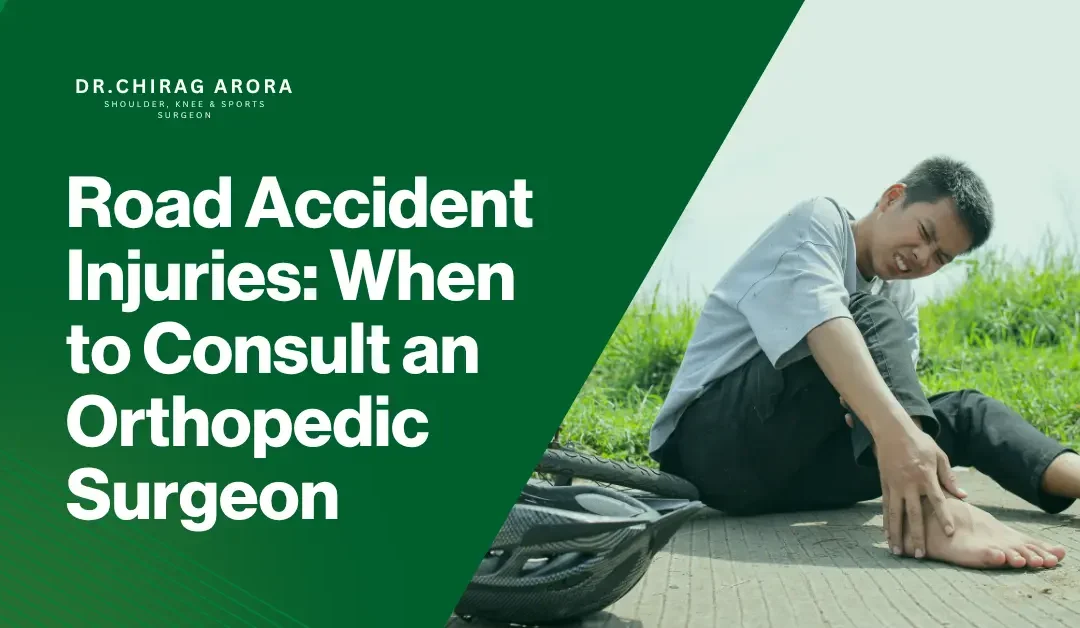
Road Accident Injuries: When to consult an orthopedic surgeon

Road Accident Injuries: When to consult an orthopedic surgeon

: WHEN TO CONSULT AN ORTHOPEDIC SURGEON

Road accidents can happen anytime. They often leave a person in pain, confusion, and stress. Some injuries may appear minor. They can become serious if ignored. Knowing when to consult a surgeon is important. It’s crucial for treatment, faster recovery and avoiding long-term complications. Consult Dr. Chirag Arora, best , for injuries and all-round orthopedic care.


Common Road Accident Injuries

After a road accident, the body can suffer from various types of injuries. The severity of the injury is a key factor. Common orthopedic injuries include:

  • Fractures (Broken Bones): These often affect the arms, legs, ribs, and collarbones.
  • Dislocations: Joints like the shoulder, elbow or knee may shift out of place.
  • Ligament injuries, such as tears to the ACL or PCL, frequently occur in the wake of high-impact trauma.
  • Spinal Injuries: These can affect the neck or back. They may involve nerves.
  • Soft tissue injuries, like muscle strains, sprains, and bruises, aren’t always apparent at first glance. They can lead to discomfort and a feeling of tightness.

Even if there are no wounds, internal injuries can still exist. That’s why a proper medical evaluation is necessary.

Signs You Should Consult an Orthopedic Surgeon

Many people ignore symptoms after an accident. They assume they will heal on their own. However, the following signs indicate that you should consult a specialist:

  1. Persistent or Severe Pain

If pain continues for a few days or gets worse, it could indicate a fracture or deep tissue injury.

  1. Swelling and Bruising

Swelling around joints or muscles may suggest damage. That needs attention.

  1. Difficulty Moving a Limb

If you are unable to walk, lift your arm, or move a joint properly. It could be an injury.

  1. Visible Deformity

If a body part looks misaligned or bent. It may be a fracture or dislocation. Requiring care.

  1. Tingling

This may indicate nerve damage. Especially in spine-related injuries.

Why Early Consultation is Important

Delaying treatment can lead to complications. Such as:

  • Bone healing
  • Chronic pain
  • Stiffness
  • Reduced mobility
  • Long-term disability

An orthopedic surgeon can diagnose the problem. Using imaging tests like X-rays, MRI, or CT scans. The recommended treatment plan is in place.

    Addressing Accident Injuries: Treatment Choices

    The approach to treatment hinges on the specific injury and its seriousness. Frequently employed methods encompass:

    • Medications: To alleviate pain and combat swelling
    • Immobilisation: Employing casts or splints to secure broken bones
    • Physiotherapy: Aids in restoring strength and mobility
    • Minimally Invasive Procedures: Like arthroscopy
    • Surgery: Required for fractures, ligament tears, or spinal injuries

    Prompt treatment is key to a successful recovery. It also helps stave off potential complications.

      The Orthopedic Surgeon’s Role

      An orthopedic surgeon is a specialist in the treatment of injuries.

      • Related to bones, joints, ligaments and muscles. Their responsibilities encompass:
      • Making a precise diagnosis of the injury
      • Formulating a treatment strategy
      • Conducting surgeries when necessary
      • Overseeing the rehabilitation and recovery process

      Ultimately, we are dedicated to ensuring a safe recovery for our patients.

        Recovery and Rehabilitation

        Recovery doesn’t end with treatment. Rehabilitation is equally important. Patients should:

        • Follow the doctor’s advice strictly
        • Attend physiotherapy sessions
        • Avoid activities during healing
        • Maintain a healthy diet for bone strength
        • Go for follow-up checkups

          Conclusion

          Road accident injuries should never be taken lightly. Even minor symptoms can hide problems. Consulting an experienced orthopedic surgeon in Gurgaon, like Dr. Chirag Arora, at the right time can make a significant difference. In recovery and overall quality of life.If you or someone you know has been in a road accident and is experiencing pain, swelling or difficulty in movement. Do not delay seeking expert care. Early diagnosis and proper treatment are the keys to a complete recovery.

          Frequently Asked Questions

          Q1. Can minor road accident injuries heal without treatment?

          Some minor injuries may heal on their own. It’s always safer to consult a doctor

          Q2. How soon should I see a surgeon after an accident?

          You should consult Dr. Chirag Arora, best orthopedic in Gurgaon, immediately if you have pain, swelling or difficulty moving.

          Q3. What tests are done for accident injuries?

          Common tests include X-rays, MRI scans and CT scans. To check bones, joints and soft tissues.

          Q4. Do all fractures require surgery?

          Not many fractures can heal with casts or braces. Surgery is needed in complex or severe cases.

          Q5. How long does recovery take after an injury?

          Recovery time depends on the injury type. Minor injuries may take weeks. While severe cases can take months.

          Q6. Is physiotherapy necessary after an accident?

          Yes, physiotherapy helps restore strength, flexibility and normal movement. After injury.

          Q7. How can you book an appointment with Dr. Chirag Arora?

          You can meet Dr. Chirag Arora at Nirvana Specialty Clinics and Fortis Hospital.
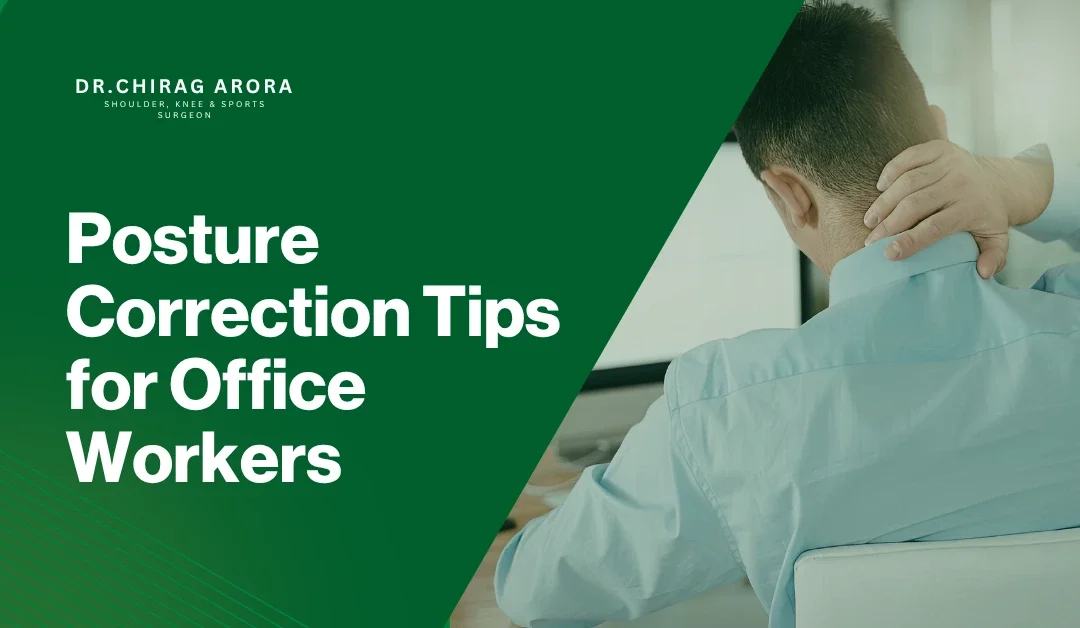
          Posture Correction Tips for Office Workers

          Posture Correction Tips for Office Workers

          FOR OFFICE WORKERS

          Most office workers spend a lot of time sitting in front of screens. This might seem like it is not a deal, but the truth is that poor posture can cause long-term health problems, like chronic pain and reduced productivity. The good news is that office workers can improve their comfort and overall well-being with a simple tip on how to correct their posture. In this blog by Dr. Chirag Arora, best shoulder doctor in Gurgaon, explains how people can correct their posture and why it is important to do so.

          Why Good Posture Matters

          Office workers need to maintain posture to keep their spines aligned and to reduce strain on their muscles and joints. Poor posture can lead to problems like back pain, neck stiffness, headaches, and even breathing problems. Over time, it can also cause conditions like spinal misalignment and repetitive strain injuries.

          For office workers, correcting posture is not about feeling comfortable, it is about preventing long-term damage to their bodies. Office workers should make sure to correct their posture to avoid health problems.

          Common Posture Mistakes in the Office

          • Office workers often slouch in their chairs
          • They lean forward toward the screen
          • They cross their legs for periods
          • They hunch their shoulders
          • They have their monitor at the wrong height

          Top Posture Correction Tips for Office Workers

          1. Office Workers should adjust their chairs properly: They should keep their feet flat on the floor, their knees at 90 degrees. Use lumbar support to maintain the spine’s natural curve. This will help office workers correct their posture.


          2. Office Workers should position their monitor at eye level: They should keep their screen at eye level and an arms length away to avoid neck strain. This is a tip for office workers to correct their posture.


          3. Office Workers should keep their keyboard and mouse close: They should make sure their elbows stay at a 90-degree angle and avoid reaching. This will help office workers maintain posture.


          4. Office Workers should always sit back in their chairs: They should sit back with their shoulders relaxed and supported. This is a way for office workers to correct their posture.


          5. Office workers should take breaks: they should follow the 30-30 rule every 30 minutes, take a short break to stretch or walk. This will help office workers correct their posture and stay healthy.


          6. Office workers would benefit from incorporating stretching into their routines: Neck rolls, shoulder shrugs, and back stretches are all good choices for easing tension.


          7. Office workers should strengthen their core muscles: Exercises like planks and bridges support posture. This will help office workers maintain posture and stay healthy.


          8. Office workers should stay mindful: They should set reminders to check their posture regularly until it becomes a habit. It’s a method for office workers to improve their posture and maintain their well-being.

            Benefits of Good Posture

            • Proper posture can alleviate back and neck pain.
            • It also tends to make you more productive.
            • Breathing and circulation improve, too.
            • It can give you a boost of confidence and energy.

              Conclusion

              Fixing your posture doesn’t mean a complete overhaul, it just takes small, consistent changes. With a few good habits, office workers can sidestep pain and feel better overall. Staying healthy means making sure you’re sitting and standing correctly.

              Do not ignore your shoulder pain, sometimes mild shoulder pain may result in serious problems. Contact Dr. Chirag Arora, best shoulder doctor in Gurgaon, for expert and personalised shoulder care. 

              Frequently Asked Questions

              Q1. How can office workers fix their posture while sitting at a desk?

              Office workers should keep their back straight, shoulders relaxed, feet on the floor and screen at eye level to correct their posture.

              Q2. How long does it take to correct posture?

              With effort, office workers can see noticeable improvement in their posture within 2–4 weeks.

              Q3. What are the signs of posture?

              Common signs of posture include back pain, neck stiffness, rounded shoulders and fatigue. Office workers should be aware of these signs to correct their posture.

              Q4. Are posture correctors helpful?

              Posture correctors can provide support temporarily. Office workers should combine them with exercises and awareness to correct their posture.

              Q5. How often should office workers take breaks while working?

              Office workers should take a break every 30 minutes to stretch and reset their posture. This will help office workers correct their posture and stay healthy.


              Q6. How can you book an appointment with Dr. Chirag Arora?

              You can meet Dr. Chirag Arora at Nirvana Specialty Clinics and Fortis Hospital.