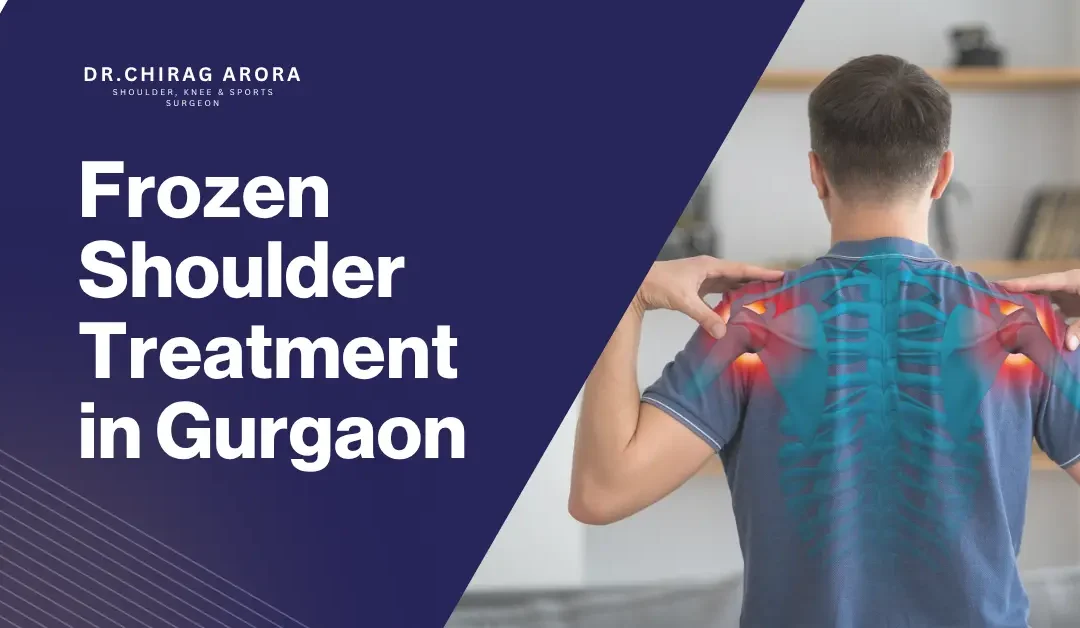
Frozen Shoulder Treatment in Gurgaon – Expert Care with Dr. Chirag Arora

Frozen Shoulder Treatment in Gurgaon – Expert Care with Dr. Chirag Arora

FROZEN SHOULDER TREATMENT IN GURGAON – EXPERT CARE WITH DR. CHIRAG ARORA

Frozen shoulder is a condition that slowly reduces shoulder movement and affects daily life. People facing this problem find it hard to do things like lifting their arms or wearing clothes. Even sleeping on one side can be difficult. In fast cities like Gurgaon, where people have busy lives and need to be comfortable and mobile, getting treatment on time is very important.

One of the doctors people trust for this condition is Dr. Chirag Arora. He is one of the best orthopedic surgeons in Gurgaon, who is known for diagnosing and treating patients in a way that is easy for them to understand. He uses advanced techniques and takes care of his patients personally, focusing on helping them regain shoulder movement and reducing pain.

What is a Frozen Shoulder?

    Frozen shoulder is a condition where the shoulder joint capsule becomes stiff and inflamed. Over time, it gets thicker and restricts movement.

    It usually happens in three stages:

    • Freezing stage:  Pain increases and  movement starts reducing
    • Frozen stage:  Pain may reduce, but  stiffness becomes severe
    • Thawing stage:  Shoulder slowly regains its movement

    If you do not get treatment, this condition can last for months or even years.

    Causes of Frozen Shoulder

        Risk of frozen shoulder may increase with:

        • A shoulder fracture
        • Long-term immobilization after surgery
        • Diabetes
        • Thyroid disorders
        • Age between 40 and 60 years
        • Lack of exercise or a sedentary lifestyle

        Understanding the causes helps orthopedic doctors create an effective treatment plan for frozen shoulders.

        Symptoms of Frozen Shoulder You Should Not Ignore

        • Have shoulder pain that worsens at night
        • Difficulty lifting or rotating my arm
        • Stiffness while moving
        • Limited range of motion
        • Pain while dressing or combing my hair

        Frozen Shoulder Treatment in Gurgaon

          The treatment for frozen shoulders depends on how severe the condition is. The goal is to reduce pain and restore movement.

          1. Medications

          You can take anti-inflammatory medicines to reduce pain and swelling in the early stages of frozen shoulder.

          2. Physiotherapy

          This is an important part of treatment. Special exercises can help you:

          • Improve flexibility
          • Reduce stiffness
          • Regain movement

          3. Steroid Injections

          In some cases, you can get injections to reduce inflammation and pain quickly.

          4. Advanced Arthroscopic Treatment

          If the condition does not improve, you may need minimally invasive surgery. Dr. Chirag Arora, best shoulder surgeon in Gurgaon, uses arthroscopic techniques to release tight tissues inside the shoulder joint.

          5. Home Care & Lifestyle Changes

          You can use a warm compress, do gentle shoulder exercises, avoid overusing your shoulder, and maintain good posture.

            Why Choose Dr. Chirag Arora in Gurgaon?

            Choosing the right orthopedic specialist is important for recovery. Dr. Chirag Arora is known for:

            • Accurately diagnosing shoulder conditions
            • Using a minimally invasive treatment approach
            • Creating effective physiotherapy plans
            • Focusing on long-term recovery, not just pain relief
            • Patient-friendly consultation and guidance

            His approach ensures that you can return to normal life faster and with better shoulder function.

            Prevention Tips for Frozen Shoulder

            • Avoid immobilization after an injury
            • Manage diabetes and thyroid levels
            • Maintain good posture while working
            • Do regular stretching exercises 

            Preventing frozen shoulders is always better than long-term treatment.

            Living Pain-Free Again

              Frozen Shoulders can be frustrating, but it is completely treatable. With proper diagnosis and the right care, most patients can regain full or near-full shoulder movement.

              If you are experiencing shoulder pain or stiffness in Gurgaon, you should see Dr. Chirag Arora, best orthopedic surgeon in Gurgaon. His structured treatment approach focuses on restoring mobility and improving quality of life.

              Conclusion

              Frozen shoulder may start as mild discomfort, but if you ignore it, it can turn into a long-lasting condition that affects your daily routine. The good news is that with proper diagnosis, structured physiotherapy, and timely medical intervention, it is completely manageable.

              In Gurgaon, patients can get effective care for frozen shoulders under the guidance of Dr. Chirag Arora. With a patient-focused approach, modern treatment techniques, and emphasis on recovery, Dr. Chirag helps individuals regain shoulder movement, reduce pain, and return to their normal lifestyle with confidence.

              If you are experiencing shoulder stiffness or pain, you should see Dr. Chirag Arora, best frozen shoulder doctor in Gurgaon, early, as it can make a big difference in your recovery journey.

              Frequently Asked Questions

              Q1. What is a frozen shoulder?

              Frozen shoulder is a condition where the shoulder joint becomes stiff and painful, gradually reducing movement over time due to inflammation and thickening of the joint capsule.

              Q2. What are the early symptoms of frozen shoulder?

              Early symptoms include shoulder pain, difficulty lifting the arm, stiffness, and worsening discomfort at night, especially while sleeping on one side.

              Q3. Who is at risk of developing a frozen shoulder?

              People aged 40–60, diabetic patients, thyroid disorder patients, and those with shoulder injury or long immobilization are at higher risk.

              Q4. How is frozen shoulder diagnosed?

              It is diagnosed through physical examination, medical history, and sometimes imaging tests like X-rays or MRI to rule out other shoulder problems.


              Q5. What is the best treatment for frozen shoulders in Gurgaon?

              Treatment includes physiotherapy, pain medications, steroid injections, and in severe cases, arthroscopic release performed by specialists like Dr. Chirag Arora.

              Q6. How long does frozen shoulder take to heal?

              Recovery may take 3 weeks to 9 months depending on severity, consistency of physiotherapy, and response to treatment.

              Q7. Can frozen shoulder heal without surgery?

              Yes, most cases improve with medications and physiotherapy. Surgery is only required in severe or non-responsive cases.

              Q8. What exercises help frozen shoulder recovery?

              Gentle stretching, pendulum exercises, and range-of-motion movements help improve flexibility and reduce stiffness gradually.

              Q9. When should you see a doctor for frozen shoulder?

              You should consult a doctor if shoulder pain and stiffness persist for more than a few weeks or interfere with daily activities like dressing or lifting the arm.

              Q10. How do I book an appointment with Dr. Chirag Arora?

              You can book an appointment with Dr. Chirag Arora, orthopedic doctor in Gurgaon, at Nirvana Clinic or at Fortis Hospital.

              Painful Shoulder: When to consider beyond Frozen Shoulder?

              Painful Shoulder: When to consider beyond Frozen Shoulder?

              PAINFUL SHOULDER : WHEN TO CONSIDER BEYOND FROZEN SHOULDER?

              Shoulder pain is one of the most common reasons patients visit an orthopaedic specialist. Two conditions that frequently cause discomfort, restriction, and night pain are Frozen Shoulder (Adhesive Capsulitis) and Rotator Cuff Tears. Although they may feel similar initially, their causes, symptoms, and treatments are completely different — which is why an accurate diagnosis is crucial.

              In this article, we break down the key differences every patient should understand, so you know when to seek treatment and what to expect.

              What Is Frozen Shoulder?

                Frozen Shoulder occurs when the shoulder joint capsule becomes inflamed, thickened, and extremely tight. This leads to progressive stiffness and difficulty moving the arm in all directions.

                Common characteristics

                • Severe stiffness
                • Pain (especially at night)
                • Gradual onset
                • Difficulty with routine activities like combing hair, reaching behind the back, or lifting the arm
                • Severly compromised movement/ROM.

                Common in

                • Women/Men aged 40–60
                • Diabetic patients/Thyroid issues
                • Post-injury or after prolonged immobilization (e.g., cast, sling)
                • Post surgery

                Frozen Shoulder is more of a stiffness problem than a tendon/strength problem.

                What Is a Rotator Cuff Tear?

                  The rotator cuff is a group of tendons that stabilize the shoulder. These tendons include supraspinatus, infraspinatus, teres minor and subscapularis. A tear in any of these tendons — commonly the supraspinatus — leads to pain, weakness, and difficulty lifting the arm.

                  Common characteristics

                  • Sharp pain
                  • Significant weakness when lifting or reaching overhead
                  • Pain during activity
                  • Often severe night pain
                  • May follow an injury, fall, or heavy lifting

                  Causes

                  • Trauma
                  • Age-related degeneration (common after age 50)
                  • Repetitive overhead work or sports

                  Rotator cuff tears are tendon injuries, not stiffness conditions.

                  Frozen Shoulder vs Rotator Cuff Tear: The Key Differences

                  1. Pain vs Stiffness

                  Frozen Shoulder:

                  • Both pain and stiffness are present, but stiffness is the main issue.

                  Rotator Cuff Tear:

                  • Pain and weakness are the dominant symptoms; stiffness is mild or secondary to pain, predominantly weakness of lifting strength.

                  2. Range of Motion

                  Frozen Shoulder:

                  • Active + Passive ROM are both restricted.
                    Even when the doctor moves your arm, movement is limited.

                  Rotator Cuff Tear:

                  • Active ROM is reduced, but
                  • Passive ROM is usually normal.
                    The doctor can lift your arm higher than you can on your own.

                  3. Onset Pattern

                  • Frozen Shoulder: Gradual, worsening over weeks to months.
                  • Rotator Cuff Tear: Sudden after trauma OR slow degenerative onset.

                  4. Weakness

                  Frozen Shoulder:

                  • Apparent weakness due to stiffness, not tendon damage.

                  Rotator Cuff Tear:

                  • True weakness because the tendon is torn.

                  5. Night Pain

                  Both may cause night pain, but it is typically much more severe in rotator cuff tears.

                  Diagnosis

                  Frozen Shoulder Diagnosis

                  • Primarily clinical (based on examination)
                  • X-ray usually normal
                  • MRI may show capsule thickening but is not always required

                  Rotator Cuff Tear Diagnosis

                  • Clinical examination
                  • Confirmed by MRI or ultrasound
                  • X-ray may show bone spurs or calcification
                  • In chronic tears, arthritis changes may develop.

                  DISTINCTION BETWEEN ROTATOR CUFF AND FROZEN SHOULDER IS CRUCIAL.

                  Rotator cuff tears are critical, in the sense that untreated full thickness tears can progress to shoulder arthritis over longer course. 

                  Treatment Options

                  Frozen Shoulder Treatment

                  • Hot packs, NSAIDs (medications)
                  • Physiotherapy (add-on treatment in addition to medications)
                  • Intra-articular steroid injection for pain relief
                  • Arthroscopic release for severe or long-standing stiffness (as a last option)

                  Rotator Cuff Tear Treatment

                  • Partial tear: Anti-inflammatory medications, PRP injection, physiotherapy, arthroscopic repair surgery.
                  • Large or full-thickness tear: Usually requires arthroscopic rotator cuff repair (first choice)
                  • Postoperative physiotherapy is essential for recovery

                  The decision for surgery in partial tear is based on your examination and usually after a non-operative trial (with medicines and PT) for 4-6 weeks. Discuss with your shoulder specialist. 

                  Recovery Timeline

                  • Frozen Shoulder: Short recovery — typically 6-8  weeks (after a steroid injection: long recovery – 4-6 months (medications)

                  • Rotator Cuff Tear:
                    • Conservative treatment: Partial tear (4-6 months)
                    • Surgery: Full tears (3 months for functional recovery)

                  How to Know Which One You Have?

                  Here’s a simple rule:

                  • Severe stiffness + difficulty rotating arm → likely Frozen Shoulder
                  • Sharp pain + weakness + difficulty lifting → likely Rotator Cuff Tear

                  However, only a detailed clinical examination and imaging can confirm the diagnosis.

                  Final Takeaway

                  Although Frozen Shoulder and Rotator Cuff Tears may both cause shoulder pain, they differ in their Causes, Symptoms, Movement Limitations, and Treatment Strategies. Early evaluation by an shoulder specialist surgeon helps prevent delayed recovery and long-term dysfunction.

                  Shoulder pain shouldn’t limit your life. If stiffness, weakness, or night pain is troubling you, consult Dr. Chirag Arora today. As a leading orthopedic and shoulder specialist in Gurgaon, he provides accurate diagnosis and advanced treatment for Frozen Shoulder, Rotator Cuff Tears, and complex shoulder conditions. Early evaluation with Dr. Arora can prevent long-term damage and ensure faster recovery. Book your appointment now.