

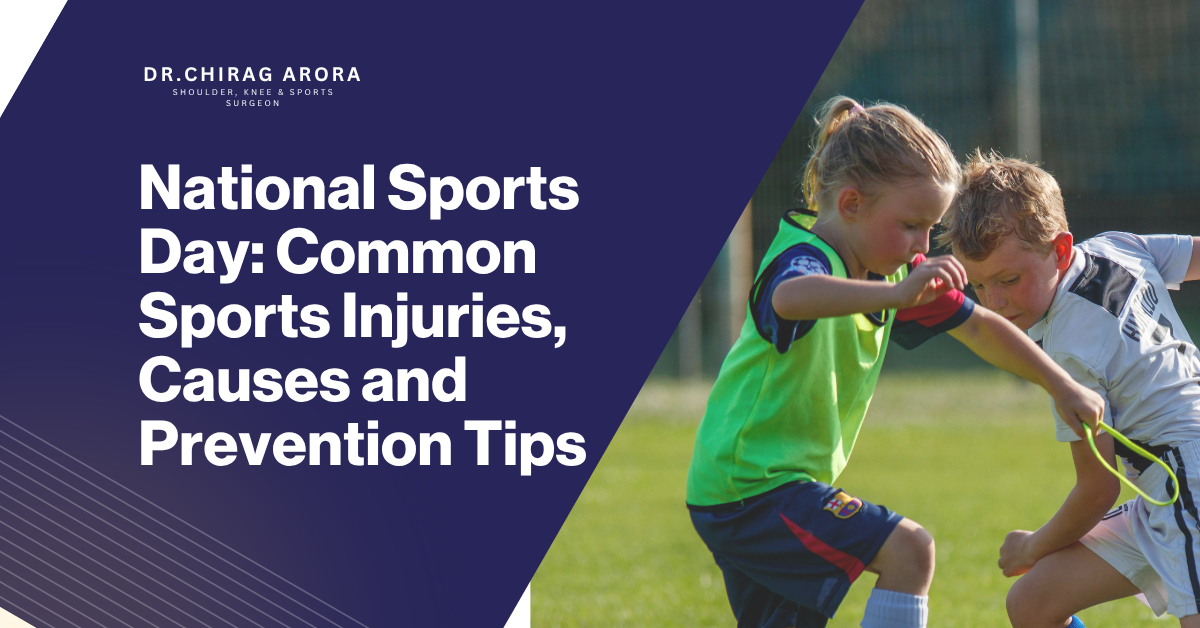
NATIONAL SPORTS DAY: COMMON SPORTS INJURIES, CAUSES AND PREVENTION TIPS
Whether you’re an athlete, a weekend cricket player, a regular at the gym or someone who just likes to stay active sports can be a great way to keep your body healthy.. Sometimes one wrong landing, sudden twist or extra push can turn a fun game into a painful injury.
Sports injuries are common. That doesn’t mean you should ignore them. A small injury if not treated can sometimes become an issue and keep you away from the activities you enjoy.
If you’re dealing with a sports-related injury or ongoing joint pain speaking with an orthopedic specialist can help you understand what is actually happening. Dr. Chirag Arora, orthopedic surgeon in Gurgaon provides evaluation and treatment guidance for a range of orthopedic and sports-related conditions.
What Are Sports Injuries?
In simple terms, a sports injury is any injury that happens while playing a sport exercising, working out or doing physical activity. Some injuries happen quickly. For example, you may twist your ankle while running or land in an injury after a jump. Others happen slowly because of repeated stress on the muscle, joint or tendon. Sports injuries can affect any part of the body but the knees, ankles, shoulders, elbows, hips, muscles, ligaments and tendons are especially at risk.
Common Sports Injuries You Should Know
- Sprained Ankle: We’ve all seen it happen, a player lands awkwardly rolls their ankle and suddenly can’t put weight on it. An ankle sprain happens when the ligaments supporting the ankle are stretched or torn. Pain, swelling, bruising and trouble walking are signs. While a mild sprain may get better with care, major swelling or instability should not be ignored. An orthopedic visit can help determine the level of injury.
- Muscle Strains: A sprint, stretch or heavy workout can sometimes cause a muscle strain. Hamstrings, calves, groin muscles and the lower back are often affected. You may feel pain, tenderness, stiffness or trouble using the affected muscle.
Allowing the injury enough time to heal is important. Going back to your sport soon can increase the chance of getting hurt again. - ACL Injuries: The ACL is one of the most important ligaments in the knee and is very important for knee stability. ACL injuries are often seen in sports like football, basketball, badminton and cricket where jumping, sudden changes in direction or stopping are common. Some people feel a weird sound at the time of the injury followed by swelling and trouble putting weight on the leg.If you think you have an ACL injury, getting checked by a specialist is important. Dr. Chirag Arora, orthopedic surgeon in Gurgaon can assess knee injuries and guide patients on the best treatment options.
- Meniscus Tears: The meniscus acts as a cushion between the bones in your knee. A sudden twisting motion can sometimes cause it to tear. Pain, swelling, stiffness, catching or trouble bending or straightening the knee may happen. You must ignore thinking that knee pain after a game is normal soreness, if it continues it’s worth getting checked.
- Fractures: High-impact sports, falls and collisions can sometimes lead to broken bones. Severe pain, swelling, deformity or an inability to use the affected limb can be signs of a fracture and need quick medical attention.
- Tendon Injuries: Tendons connect muscles to bones and can get irritated or damaged due to repeated actions. Conditions like tennis elbow, Achilles tendon problems and patellar tendon injuries are often linked to sports and repeated physical activity.
Why Do Sports Injuries Happen?
Injuries don’t always come from one accident. Sometimes it’s a mix of things.
Some common reasons are:
1. Forgetting to warm up
2. Using the technique
3. Increasing workout intensity too fast
4. Training too much
5. Weak or unbalanced muscles
6. Not enough flexibility
7. Not resting enough
8. Wearing the wrong shoes or equipment
9. Getting back to sports too soon after an injury
10. Sudden falls, collisions or awkward movements
Understanding what caused an injury can be just as important as treating the injury itself.
How Can You Prevent Sports Injuries?
You can’t completely stop injuries, you can reduce the chances.
- Never Skip Your Warm-Up
A few minutes of proper warm-up can get your muscles and joints ready for activity instead of jumping into a tough workout or game give your body time to prepare.
- Focus on Your Technique
Whether you’re lifting weights, running, playing cricket or doing any sport, technique is important. Wrong movements can put stress on your joints and muscles. If you’ve stopped exercising don’t try to go to your old intensity right away. Increase your activity gradually and let your body adjust.
- Keep Your Muscles Strong
Strong muscles give support and stability to your joints. A balanced workout routine that includes strength and flexibility training can help you move better and possibly lower the risk of injury.
- Wear the Right Gear
Good quality, sport-specific shoes and protective equipment can make a difference. Your gear should also match the activity you are doing.
- Give Your Body Time to Recover
Rest is not a sign of weakness, recovery is part of training. Keeping going when tired can increase the chance of overuse injuries. Make sure your body gets time to recover between intense sessions.
- Listen to Your Body
This might be the most important rule of all. There is a difference between soreness after a workout and pain that shows an injury. If you have lasting pain, swelling, instability or trouble moving a joint don’t just keep playing. Hope it goes away.
When Should You See an Orthopedic Surgeon?
Not every sports injury needs surgery. However some injuries need evaluation to avoid problems and help you get back to your normal life safely.
Think about visiting a specialist if you have:
- Severe or ongoing pain
- Big swelling
- Trouble walking or putting weight on the limb
- Joint instability
- Limited movement
- A suspected break or dislocation
- A sound followed by pain or swelling
- Injuries that keep happening in the same area
- Pain that doesn’t go away even after resting
Conclusion
Sports are meant to keep us moving, active and healthy. An injury doesn’t have to mean the end of your game. It also doesn’t mean you should ignore it.Warm up before any activity pay attention to how you perform the movements increase your strength slowly make sure you have the tools and above all pay attention to what your body is telling you.If you feel pain or there is swelling that doesn’t go away after a sports injury getting medical advice at the beginning can really help with your healing process.
Frequently Asked Questions
Q1. What are the most common sports injuries?
Some common sports injuries include ankle sprains, muscle strains, ACL injuries, meniscus tears, fractures, dislocations, and tendon injuries.
Q2. Can sports injuries be prevented?
Not every injury can be prevented, but proper warm-up, strength training, correct technique, suitable equipment, gradual training, and adequate recovery can help reduce the risk.
Q3. Should I continue playing if I have pain?
If you have significant or persistent pain, it is better to stop the activity and get it evaluated rather than repeatedly playing through the pain.
Q4. Are knee injuries common in athletes?
Yes. Sports involving running, jumping, twisting, and sudden changes in direction can put considerable stress on the knee.
Q5. What is an ACL injury?
An ACL injury is damage to the anterior cruciate ligament of the knee. It commonly occurs during sudden changes in direction, jumping, landing, or twisting movements.
Q6. Does every sports injury require surgery?
No. Many sports injuries can be managed with rest, activity modification, physiotherapy, rehabilitation, and other non-surgical treatments. Surgery may be considered for certain severe injuries.
Q7. How long does it take to recover from a sports injury?
Recovery depends on the type and severity of the injury. A minor sprain may recover relatively quickly, while ligament injuries or fractures can require a longer rehabilitation period.
Q8. When should I see an orthopedic surgeon?
You should consider an orthopedic consultation if you have persistent pain, significant swelling, instability, difficulty walking, restricted movement, or symptoms following a serious injury.
Q9. Can I return to sports after an injury?
Yes, many people return to their favourite sports after appropriate treatment and rehabilitation. The timing depends on the specific injury and individual recovery.
Q10. Who can I consult for sports injuries in Gurgaon?
If you are looking for an orthopedic specialist for a sports-related injury, Dr. Chirag Arora, best orthopedic surgeon in Gurgaon, can evaluate your condition and guide you regarding appropriate treatment and recovery.
0 Comments