

WHEN DO YOU NEED AN MRI FOR KNEE OR SHOULDER PAIN?
Knee or shoulder pain can be annoying especially when it starts affecting things like walking, climbing stairs, lifting your arm playing sports or even sleeping comfortably.
When the pain does not go away one of the questions people often ask is, “Do I need an MRI?”
An MRI is a useful test for finding problems inside the knee or shoulder but it is not required for every type of pain. In some cases, a doctor can get a good idea of the problem through your symptoms, medical history and physical examination.
If you are looking for an experienced Orthopedic Surgeon In Gurgaon, Dr. Chirag Arora may help you understand when an MRI may actually be helpful and can make your consultation more meaningful.
What Is an MRI?
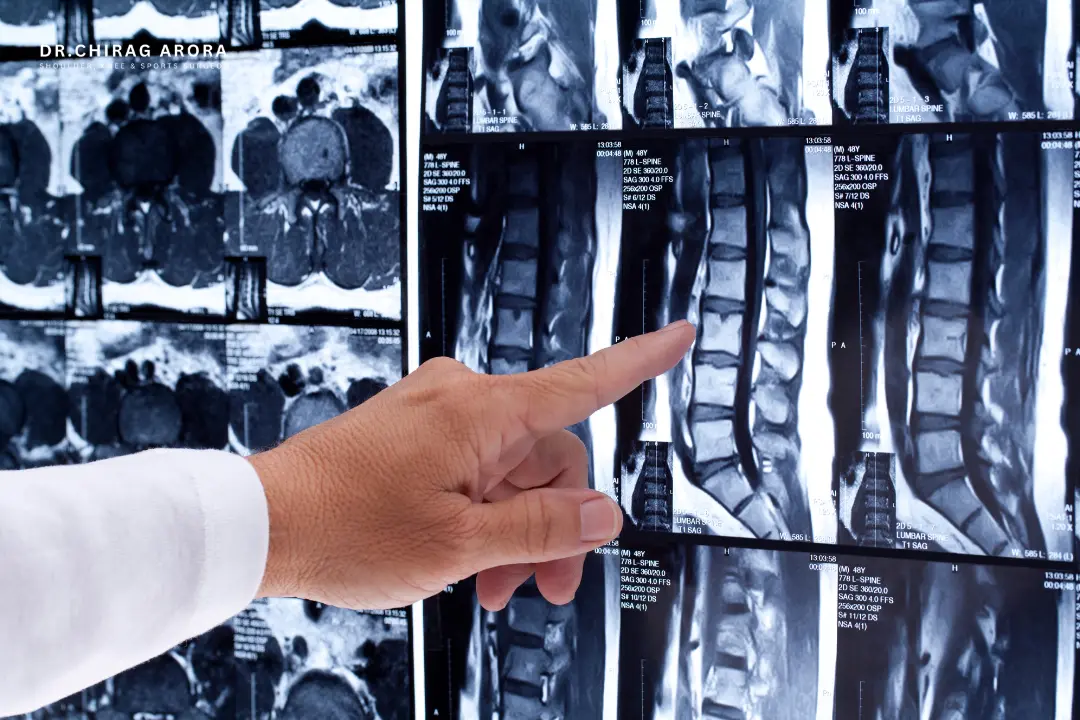
MRI stands for Magnetic Resonance Imaging. Unlike an X-ray, which mainly shows bones, an MRI can provide images of soft tissues such as muscles, tendons, ligaments, cartilage and other structures around a joint.
For knee and shoulder problems, this can help an orthopedic specialist identify an injury or condition that may not be visible on an X-ray.
However an MRI should generally be recommended based on the situation rather than simply because the pain has been present for a certain number of days.
MRI for Knee Pain
Not every episode of knee pain requires an MRI. Your orthopedic doctor may consider one when there is a concern about an injury or when symptoms continue despite appropriate initial treatment.
An MRI may be considered if you have:
- Knee pain that is not improving
- A suspected ACL, PCL or meniscus tear
- Knee pain following a sports injury
- A feeling that the knee’s unstable or “giving way”
- Locking or catching of the knee
- Suspected cartilage damage
- Significant swelling after an injury
Persistent symptoms despite physiotherapy or other conservative treatment
For example, someone who twists their knee while playing football and develops swelling, instability and difficulty putting weight on the leg may need further evaluation. In some situations an MRI can help the orthopedic specialist understand what has happened inside the joint.
You Might You Need an MRI for Shoulder Pain
Shoulder pain can have causes ranging from muscle strain to tendon injuries and problems involving the joint itself.
An MRI may be recommended when your doctor suspects conditions such as:
- Rotator cuff tear
- Labral tear
- Shoulder instability
- Tendon injury
- Cartilage damage
- Sports-related shoulder injuries
Persistent shoulder pain that has not responded to initial treatment. If you have pain while lifting your arm, weakness in the shoulder, repeated dislocation or ongoing discomfort after an injury your doctor may recommend an MRI depending on the examination findings.
Is an MRI Needed for Every Knee or Shoulder Injury?
No. This is a point because MRI scans are often seen as the quickest way to find the cause of pain.. An MRI is only one part of the diagnostic process.
For common problems your orthopedic doctor may initially recommend rest, activity modification, medication where appropriate, physiotherapy or other conservative measures. An X-ray may also be enough to identify bone or joint problems.
The decision depends on your symptoms, examination, age, injury history and response to treatment.
MRI vs X-Ray: Know the Difference
Both tests provide information but they are designed to look at different things.
X-ray:
An X-ray is particularly useful for examining bones and identifying problems such as fractures, arthritis and changes in alignment.
MRI:
An MRI provides more detail about soft tissues, including ligaments, tendons, cartilage and muscles. In some cases your orthopedic doctor may recommend both tests because they provide types of information.
Can an MRI Find the Exact Cause of Pain?
An MRI can show changes inside a joint but an abnormal finding does not always mean it is the reason for your pain.
Some people may have changes on an MRI without experiencing significant symptoms. This is why MRI findings need to be interpreted along with your symptoms and physical examination.
A good orthopedic evaluation is therefore not about looking at the scan, it is about understanding the complete picture.
This is what happens during a Knee or Shoulder MRI
An MRI is generally painless and does not involve X-ray radiation. You will lie still while the MRI machine creates images of the area being examined.
The scan may take some time. You will need to remain as still as possible. Some people find the enclosed space uncomfortable. It is worth discussing any concerns with the imaging centre beforehand.
Depending on the condition being investigated by your doctor, they may not recommend contrast during the scan.
When Should You See a Doctor?
Do not ignore knee or shoulder pain simply because it is manageable, at first. You should consider a consultation if the pain keeps returning, affects your daily activities, causes weakness or instability or follows an injury.
Early evaluation can help determine whether you actually need an MRI or whether another form of assessment is more appropriate.
If you are looking for good Orthopedic Surgeon In Gurgaon with whom you can discuss your symptoms and treatment options with a specialist before deciding on advanced imaging.
Conclusion
An MRI can be extremely helpful when a knee or shoulder problem involves structures that cannot be properly assessed through an X-ray or physical examination alone. Getting an MRI immediately is not always necessary.
The right approach is to understand what may be causing the pain and then choose the investigation that can provide useful information.
If your knee or shoulder pain is persistently worsening or affecting your activities, an orthopedic consultation can help determine the next step, including whether an MRI is actually needed. Consult Dr. Chirag Arora, an orthopedic specialist in Gurgaon, to find out whether an MRI or another evaluation is right for you.
Frequently Asked Questions
Q1. Is an MRI necessary for knee pain?
Not always. An MRI may be recommended when there is a suspected ligament, meniscus, cartilage or other soft-tissue injury, particularly when symptoms persist.
Q2. When should I get an MRI for shoulder pain?
An MRI may be considered when there is suspected rotator cuff or labral injury, instability, significant weakness or persistent symptoms that require further evaluation.
Q3. Is an MRI better than an X-ray for knee problems?
They serve different purposes. X-rays are useful for evaluating bones, while MRI provides more detailed information about soft tissues such as ligaments, tendons and cartilage.
Q4. Can an MRI detect an ACL tear?
Yes. MRI can provide detailed images of the ACL and can help identify an ACL tear along with other internal knee injuries.
Q5. Can an MRI detect a rotator cuff tear?
Yes. MRI can show the rotator cuff tendons and help identify tears and other soft-tissue abnormalities.
Q6. Does an MRI hurt?
MRI itself is generally painless. The main challenge for some people is staying still or being inside the scanner.
Q7. Does an MRI use radiation?
No. MRI uses magnetic fields and radio waves rather than X-ray radiation.
Q8. Can I have an MRI immediately after a sports injury?
It depends on the injury and your symptoms. Your orthopedic doctor will determine whether an MRI is useful immediately or whether initial evaluation and treatment should come first.
Q9. What if my MRI shows a tear but I have little pain?
An MRI finding does not always explain symptoms by itself. Your doctor will consider the scan together with your symptoms and physical examination.
Q10. Who should I consult for knee or shoulder pain in Gurgaon?
An orthopedic specialist can evaluate your symptoms, perform an examination and determine whether you need an MRI or another form of investigation.
0 Comments