

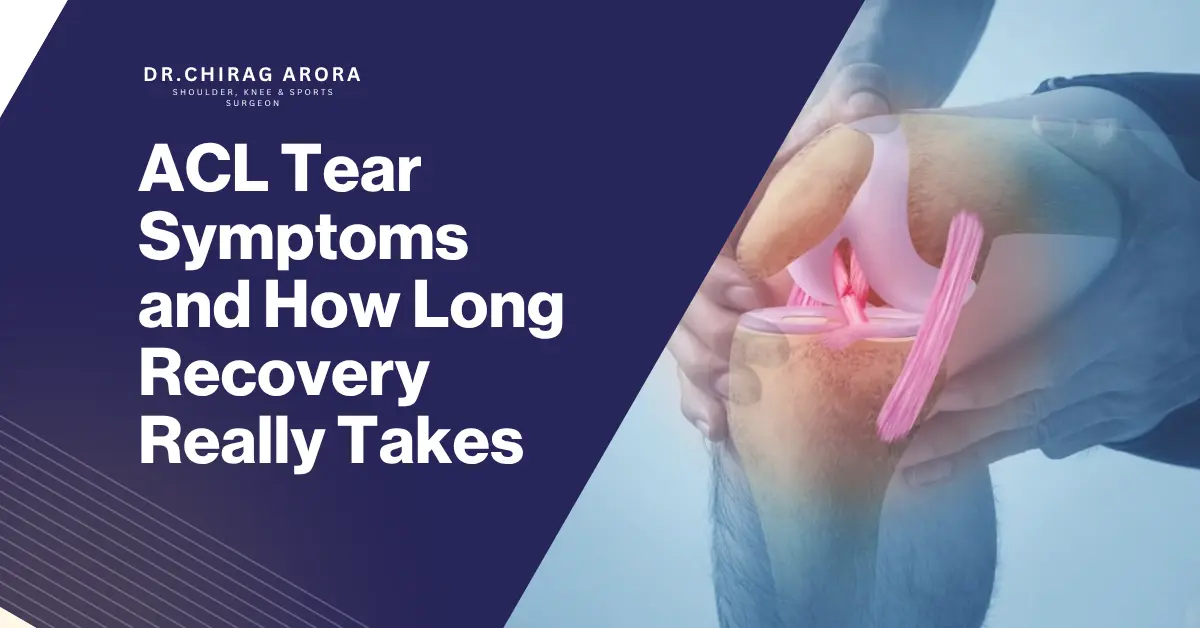
ACL TEAR SYMPTOMS AND HOW LONG RECOVERY REALLY TAKES
An ACL tear can happen in a split second. You may land awkwardly after a jump and turn suddenly while playing a sport or twist your knee while your foot remains fixed on the ground. Some people hear a pop sound while others immediately feel that something inside the knee is not right. The pain may settle after some days but that does not always mean the knee has healed. If your knee continues to feel weak, swollen or unstable it is important to have it examined. You can consult Dr. Chirag Arora, best orthopedic surgeon in Gurgaon to understand the injury and the most suitable treatment for you.
What Is an ACL Tear?
The Anterior Cruciate Ligament, which is commonly called the ACL, is one of the ligaments inside the knee. The ACL connects the thigh bone to the shin bone and keeps the knee stable during walking, running, jumping and turning. An ACL injury happens when this ligament is overstretched or torn. This kind of injury is common among people who play football, cricket, basketball, badminton and other sports that involve stops or changes in direction. However you do not need to be an athlete to suffer an ACL tear, a fall road accident or simple awkward twist can also cause it.
What Does an ACL Tear Feel Like?
Every person experiences an ACL tear differently. Some people have pain, while others mainly notice swelling and instability. Here are the common ACL tear symptoms:
- A popping sound or sensation: Many patients remember hearing or feeling a “pop” when the injury occurred. They may be unable to continue playing or place weight on the leg afterward.
- Swelling within a hours: Noticeable knee swelling after injury is a common sign of an ACL tear. The swelling may develop quickly because of bleeding inside the knee joint.
- The knee feels unstable: After an ACL tear, your knee may suddenly feel weak or buckle while walking, turning, or climbing stairs. This feeling of knee instability often becomes more noticeable when you try to return to sports.
- Pain while walking or bending: You may experience knee pain while walking, bending the leg or putting weight on it. The knee may also feel stiff making it difficult to straighten or bend fully.
- Difficulty running or changing direction: Straight-line walking may feel manageable but running, jumping or turning can remain difficult. This is because the ACL plays a role in controlling rotational movements.
These symptoms may also occur with a meniscus injury, cartilage damage or another ligament injury. An examination by a knee specialist in Gurgaon can help identify what has actually been damaged.
ACL Tear Does Not Always Require Surgery
Every ACL tear does not require surgery. ACL tear treatment without surgery may be suitable if the ACL tear is partial and the knee remains reasonably stable.Treatment for an ACL tear may include rest, a knee brace and physiotherapy. Physiotherapy helps reduce swelling, restore knee movement and strengthen the muscles supporting the joint. A planned ACL rehabilitation programme may help some patients return to normal daily activities without surgery.
ACL reconstruction surgery may be advised if:
- The ligament is completely torn.
- The knee repeatedly gives way or feels unstable.
- You want to return to sports involving running, jumping or pivoting.
- The ACL tear is accompanied by meniscus damage.
An experienced ACL surgeon Dr. Chirag Arora in Gurgaon can explain both treatment options and help you make a practical decision based on your injury, lifestyle and activity goals.
Recovery of ACL Tear
This is one of the most common questions patients ask. The honest answer is that ACL recovery is different for everyone.
- A mild sprain or partial ACL tear treated without surgery may take around 6 weeks to 3 months to improve.
- After ACL surgery, the first few weeks focus on controlling swelling, improving movement and activating the thigh muscles.
- Between 2 and 4 months, exercises are gradually increased to improve strength, balance and knee control.
- Light jogging may begin after 3 to 4 months if the knee has recovered well.
- The usual recovery time after ACL surgery is around 6 to 9 months.
- Athletes involved in contact sports or activities requiring sudden turns may need 9 to 12 months.
These timelines are general estimates. Recovery should not be decided by the calendar alone. Your knee should have sufficient strength, balance, movement and control before you return to sports.
Why Do Some People Take Longer to Recover?
Recovery may be slower if there is swelling, muscle weakness, meniscus damage or irregular physiotherapy. Trying to return to sports early can also cause setbacks and consistent rehabilitation is as important as the surgery itself. Following the exercise plan, attending follow-ups and increasing activity can make the recovery process safer.
When Should You See an Orthopedic Surgeon?
You should consult an orthopedic in Gurgaon if your knee becomes swollen after an injury, feels unstable or repeatedly gives way. You should also seek help if pain stops you from walking, exercising or returning to your routine. For ACL treatment in Gurgaon you can consult Dr. Chirag Arora, who is a good orthopedic surgeon in Gurgaon. A proper examination can help you understand whether you need rehabilitation, surgery or a combination of both.
Conclusion
An ACL tear can affect knee strength, stability and your ability to perform daily activities or play sports. Although pain may improve within a few days, ongoing swelling, weakness or instability should not be ignored. Early diagnosis and a structured rehabilitation plan can support safer recovery and reduce the risk of further knee damage. If you are experiencing symptoms of an ACL tear, consult Dr. Chirag Arora, an experienced orthopedic surgeon in Gurgaon, for proper evaluation and suitable treatment guidance.
Frequently Asked Questions
Q1. Can I walk with an ACL tear?
Some people can walk with an ACL tear once the initial pain reduces. However, the knee may still be unstable and require treatment.
Q2. Can an ACL tear heal without surgery?
A partial tear may be managed without surgery in selected cases. A completely torn ACL usually does not join back naturally.
Q3. How can I tell if my ACL is torn?
A popping sound, quick swelling, pain and a feeling that the knee may give way are common signs. An examination and MRI can confirm it.
Q4. Is ACL surgery very painful?
Some pain is expected after surgery, but it can usually be managed with medicines, ice therapy and rehabilitation.
Q5. How soon can I walk after ACL surgery?
Most patients start walking with support soon after surgery. The exact timing depends on the procedure and any associated knee injuries.
Q6. When can I return to office work?
People with desk jobs may return within two to four weeks. Jobs involving standing, lifting or physical work may require more time.
Q7. When can I drive after ACL surgery?
Driving may be possible after a few weeks when you have adequate knee movement and control. Always follow your surgeon’s advice.
Q8. Can I play sports again after ACL surgery?
Yes. Many patients return to sports after completing rehabilitation and passing strength and movement tests.
Q9. What happens if an ACL tear is not treated?
An unstable knee may repeatedly give way and eventually damage the meniscus or cartilage.
Q10. Who should I consult for ACL treatment in Gurgaon?
You can consult Dr. Chirag Arora, Best Orthopedic Surgeon In Gurgaon for ACL diagnosis, rehabilitation guidance and surgical treatment.
0 Comments