


KNEE REPLACEMENT VS KNEE ARTHROSCOPY: WHICH ONE DO YOU ACTUALLY NEED?
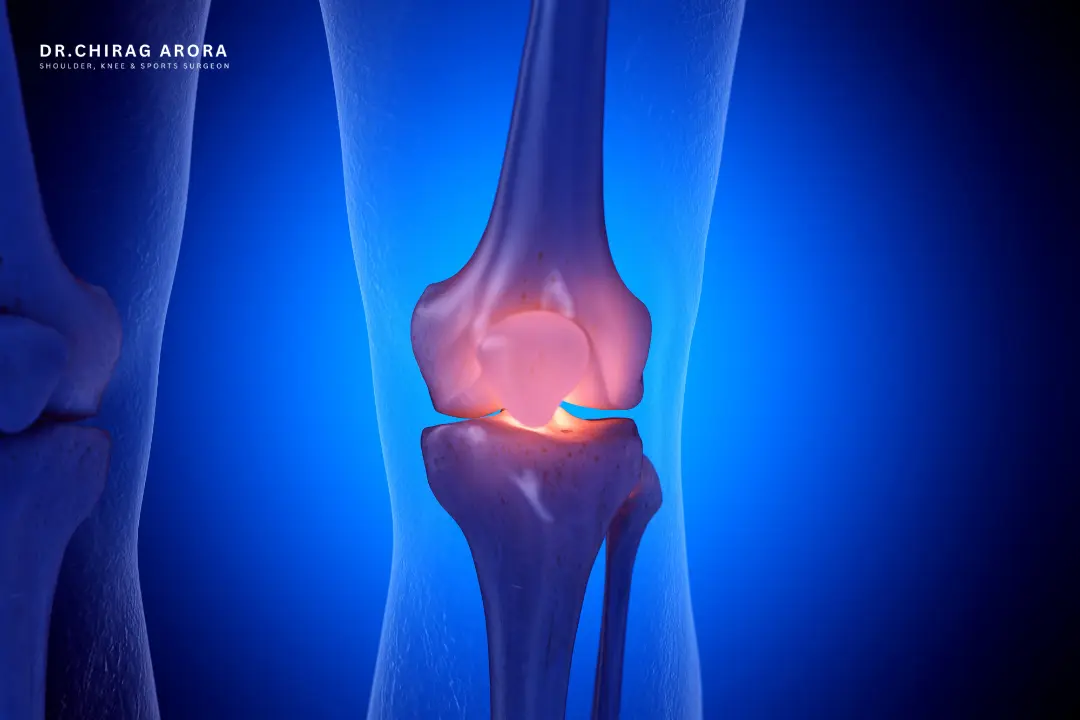
When knee pain starts to change how you walk, sleep or do things surgery could be a choice. Not all knee issues need the same operation. Two options that are often talked about are knee replacement and knee arthroscopy.
Even though both are kinds of knee surgery they handle different problems. Knee arthroscopy usually takes care of injuries inside the joint while knee replacement is used when arthritis has damaged the knee a lot. In this article, Dr Chirag Arora, best orthopedic doctor in Gurgaon, explains the difference between these two and how doctors choose which treatment is right.
What Is Knee Arthroscopy?
Knee arthroscopy is a type of surgery that’s not very big. It is done through minimal cuts. During the surgery, the doctor puts a camera called an arthroscope into the knee. This lets the doctor see the inside of the joint and treat the area that is damaged using tools.
Knee arthroscopy might be a choice for:
- Some kinds of meniscus tears
- Pieces of cartilage or bone that are loose
- Some injuries to ligaments
- Inflammation in the lining of the knee
- Knee locking caused by a mechanical issue
- Certain injuries to cartilage
A knee arthroscopy is usually better for treating a specific soft-tissue or mechanical issue rather than widespread knee arthritis. It is not usually a long-term solution for advanced osteoarthritis when most of the joint is damaged.
What Is Knee Replacement Surgery?
Knee replacement surgery is when the damaged parts of the knee joint are taken out and replaced with parts made of metal and plastic. Depending on how much damage there is, and where it is, a person might need either a partial knee replacement or a total knee replacement.
Knee replacement might be suggested when:
- Severe knee arthritis causes pain that does not go away
- Walking or going up stairs is hard
- Pain continues when resting or sleeping
- Medicines, injections, and physical therapy do not help enough
- The knee is stiff, bent, or not stable
- X-rays show a big loss of space in the joint
The goal of joint replacement surgery is to reduce pain, fix any shape problems, and help with daily movement. Dr Chirag Arora, knee doctor in Gurgaon, checks the patient’s symptoms, how well they can move and how much damage there is before suggesting knee replacement surgery.
Knee Arthroscopy and Knee Replacement: The Main Difference
The biggest difference is the kind and how much damage each surgery treats.
Knee arthroscopy fixes or takes out a part that is damaged in a knee that is mostly still working. It could be right for a meniscus injury from an accident, a piece of bone or another issue that is clear.
Knee replacement deals with a lot of damage that affects the surface of the joint. It is often used for advanced knee osteoarthritis, rheumatoid arthritis or big joint damage.
In simpler terms, knee arthroscopy deals with a specific problem inside the joint while knee replacement makes the damaged joint surface better.
Which Procedure Has a Faster Recovery?
Recovery from knee arthroscopy is usually quicker because the surgery uses minimal cuts and does not replace the joint. Many people can start walking after this procedure. Full recovery depends on what exactly was done. Recovery after a meniscus repair is different from recovery after a ligament repair.
Recovery from knee replacement takes longer. Patients usually start standing and walking with help after the surgery, then follow a planned programme to get stronger. Physical therapy after knee surgery helps with strength, movement and balance.
A short recovery does not mean arthroscopy is always better. The right choice is the one that deals with the exact reason for the knee pain.
Can Arthroscopy Stop Knee Replacement?
Knee arthroscopy can treat some injuries but it can’t bring back cartilage that has been lost because of severe arthritis. For mild or moderate knee arthritis, treatments that do not involve surgery may include losing weight, exercising, physical therapy, medicines, changing activities, and injections. Surgery is considered after checking the patient and looking at the scans.
How Is the Right Knee Surgery Chosen?
Age by itself does not decide the treatment. Dr Chirag Arora, Best Knee Surgeon In Gurgaon looks at things before suggesting a procedure, including:
- What is causing the knee pain and where it is
- How bad the cartilage damage is
- If the knee is stable and how much it can move
- What the X-rays or MRIs show
- What previous treatments have done
- What the person does for work and how active they are
- Their general health and medical background
An MRI may be needed if a meniscus tear or ligament injury is suspected. Weight-bearing X-rays are often helpful for checking arthritis and seeing if knee replacement is the right choice.
What Do You Actually Need?
You may need knee arthroscopy if the surfaces of your knee are mostly okay. You have an injury inside that causes pain, catching, or locking.
Partial or total knee replacement may be needed if advanced arthritis has caused a lot of cartilage loss, stiffness, constant pain, and trouble doing things.
Neither surgery nor arthroscopy should be picked just because it seems more modern or has a quicker recovery. A good knee pain diagnosis is important. Seeing Dr Chirag Arora, Best Orthopedic Surgeon In Gurgaon can help find out the cause and decide the treatment options.
Conclusion
Knee arthroscopy and knee replacement surgery are used for different kinds of knee problems. Arthroscopy might be right for some meniscus tears, cartilage or ligament injuries, while knee replacement is usually suggested when severe arthritis has damaged the joint and made it hard to move. The right surgery depends on your symptoms, what the doctor finds and what the scans show. Talk to Dr Chirag Arora, Best Orthopedic Surgeon in Gurgaon for a check-up and a plan for your knee treatment.
Frequently Asked Questions
Q1. What is the cost of Knee replacement surgery in Gurgaon?
The average cost is between ₹1,50,000 and ₹3,50,000 per knee.
Q2. Who is the best orthopedic surgeon in Gurgaon for knee replacement?
Dr. Chirag Arora is the best orthopedic surgeon in Gurgaon who specialises in knee replacement surgery, including conventional and robotic-assisted procedures.
Q3. How long will I need to stay in the hospital?
Most patients remain in the hospital for around three to five days. The duration may vary depending on their health and recovery.
Q4. How long does it take to recover from knee replacement surgery?
Most patients can walk with support within 24-48 hours. Resume normal activities in 6-12 weeks.
Q5. How soon can I walk after knee replacement surgery?
Many patients begin walking with assistance within one or two days. The surgeon and physiotherapist will decide when it is safe to start.
Q6. How long does complete recovery take?
Most patients return to regular daily activities within six to twelve weeks. Full recovery may take longer depending on age, health, and physiotherapy.
Q7. Can both knees be replaced at the same time?
Yes, bilateral knee replacement is possible. Is often more cost-effective.
Q8. How do I choose the right knee surgeon in Gurgaon?
Choose a knee surgeon based on experience, patient reviews, surgical techniques, hospital facilities, and cost transparency. Dr. Chirag Arora offers personalised knee replacement treatment in Gurgaon.
Q9. Should I get a second opinion before surgery?
Yes. A second opinion may help if you are uncertain about your diagnosis, available treatment options or the recommended surgical procedure.
Q10. Who is the best knee surgeon in Gurgaon?
Dr Chirag Arora is considered one of the best knee surgeons in Gurgaon. He provides treatment for knee arthritis, sports injuries, ligament tears, meniscus problems, knee arthroscopy and knee replacement surgery.







0 Comments