

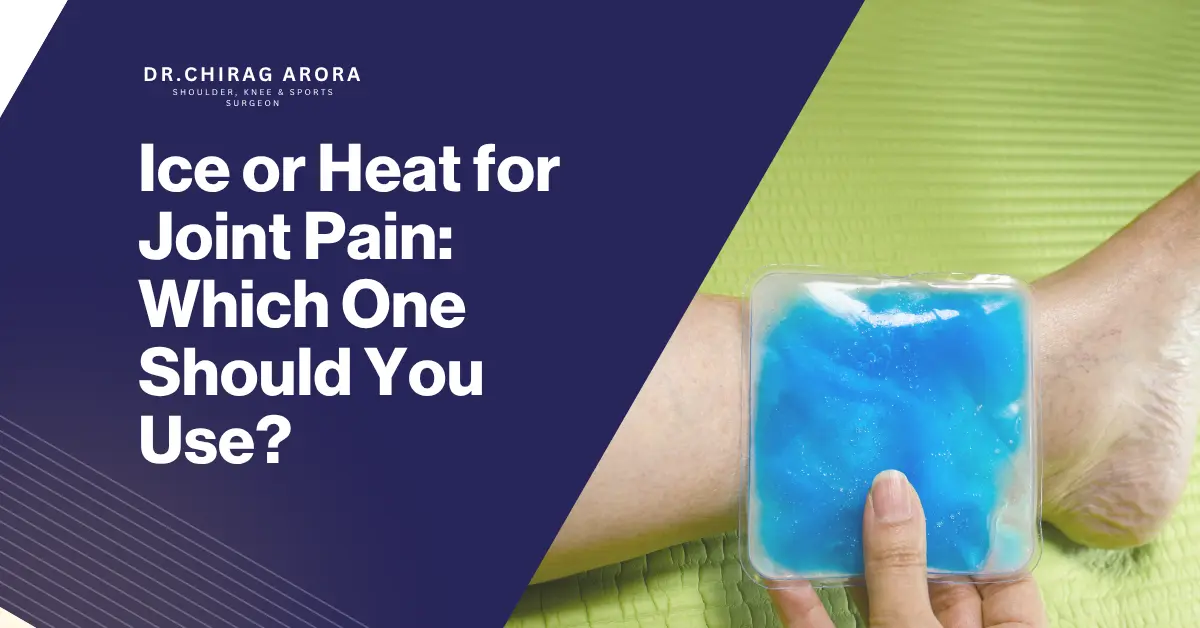
ICE OR HEAT FOR JOINT PAIN: WHICH ONE SHOULD YOU USE?
Your knee aches after a workout or your shoulder feels stiff after a long day at your desk. Someone suggests an ice pack. Another person recommends a hot water bottle. Which advice should you follow?
Choosing ice or heat for pain depends on what is happening around the joint. An injured swollen knee needs a different approach from a shoulder that feels tight without swelling.
Both options can provide relief but neither replaces finding the cause of persistent pain. In this blog by Dr. Chirag Arora, top orthopedic surgeon in Gurgaon, we discuss when do you need heat and when do you need ice for your joint pain.
When to Use Ice for Joint Pain
Understanding when to use ice for pain starts with checking for a recent injury or swelling. Cold therapy may help ease pain and swelling after a sprain or strain.
For example, if you twist your ankle during a game and it starts swelling a wrapped cold pack may help make it more comfortable. Avoid heat during the couple of days after a fresh sprain or strain because it can increase swelling.
Using ice for a joint can provide short-term relief but swelling without a clear injury should not automatically be treated as a simple strain. A hot painful swollen joint may need urgent medical assessment.
Applying a Cold Pack to Knee Pain
Pain happens after an injury or with swelling . A cold pack ( for pain in the knee ) can help .
Follow these steps:
– Place a towel between the pack and your skin.
– Apply it for around 15–20 minutes.
– Check your skin regularly.
– Let the skin return to its temperature before another application.
– Stop if you develop burning, unusual discomfort or skin changes.
Colder is not necessarily better, direct contact with ice can damage the skin. Do not leave a pack on while sleeping or use it over a wound.
When to Use Heat for Joint Pain
Knowing when to use heat for pain is useful when stiffness or muscle tightness is the main concern. Gentle warmth can relax surrounding muscles and provide temporary comfort.
People sometimes find heat for stiffness helpful before gentle movement particularly when the area feels tight without being hot or swollen. However, the heat should feel warm, not intensely hot.
Avoid heating an injured or actively swollen area. The decision should depend on your symptoms rather than simply how many days have passed since the pain began.
Can a Heating Pad Help Shoulder Pain?
If tight muscles are a contributing factor to your shoulder pain, a heating pad may be helpful. However shoulder pain can have many causes so improvement with warmth does not confirm a proper diagnosis.
Use the heating pad on a low or comfortable temperature setting, following the manufacturer’s instructions. Place a thin towel between the pad and your skin to prevent burns. Apply it for approximately 15–20 minutes, checking your skin regularly for redness, irritation, or discomfort. Stop using it immediately if it feels too hot.
Do not sleep with the pad switched on. Remove it if the shoulder becomes more painful, swollen or irritated. Persistent difficulty, lifting your arm needs assessment rather than repeated heat treatment.
Heat After a Sports Injury
The question of ice or heat after a sports injury often comes up immediately after a fall landing or sudden twist.
For a sprain or strain with swelling, a wrapped cold pack is generally the more suitable option for temporary relief. Protect the area and stop the activity that caused the pain, elevation may also help control swelling.
As symptoms settle, gentle movement can help prevent stiffness. Avoid returning to sports simply because a pack has reduced the pain. Severe pain, substantial swelling or difficulty bearing weight needs assessment.
Managing Joint Pain at Home
Managing joint pain at home involves more than choosing a pack. Notice which activities worsen your symptoms and adjust them while maintaining movement.
Avoid repeatedly pushing through pain and using temporary relief to continue an aggravating workout. If symptoms keep returning an examination can help guide rehabilitation and treatment.
People with less sensation, poor circulation or conditions affecting these should seek professional advice before using ice or heat. Both treatments can injure skin when temperature changes are difficult to feel.
Conclusion
Choosing ice or heat for joint pain depends on your symptoms. Ice may ease pain and swelling after a minor injury, while gentle heat may help stiffness and muscle tightness. Always protect your skin and remember that both provide temporary relief.
If pain persists, keeps returning, or affects everyday movement, consult Dr. Chirag Arora in Gurgaon for assessment and suitable treatment. A suddenly hot, swollen joint, especially with fever, needs urgent medical attention.
Frequently Asked Questions
Q1. Is ice or heat better for joint pain?
The choice depends on your symptoms. Ice may help relieve pain and swelling after a minor injury, while gentle heat may ease stiffness and muscle tightness. Neither treatment addresses every cause of joint pain.
Q2. When should ice be used for joint pain?
Ice may help after a recent minor sprain or strain, particularly when there is swelling. Wrap the cold pack in a towel and apply it for approximately 15–20 minutes, checking your skin regularly.
Q3. When should heat be used for joint pain?
Gentle heat may help when stiffness or muscle tightness is the main problem and the area is not hot or swollen. Avoid heat during the first couple of days after a fresh sprain or strain.
Q4. Can ice help a swollen joint?
Ice can provide temporary relief from swelling and discomfort after a minor injury. However, sudden or unexplained joint swelling needs assessment, especially if the joint feels hot or you feel unwell.
Q5. What are common wrist tendonitis symptoms?
Gentle warmth may make a stiff joint feel more comfortable and relax surrounding muscles before gentle movement. Stop if heat increases pain or swelling, and avoid forcing the joint through painful movements.
Q6. Should ice or heat be used after a sports injury?
For a fresh sprain or strain with swelling, a wrapped cold pack is generally more suitable for temporary relief. Avoid heat initially. Severe pain, substantial swelling, or inability to bear weight requires medical assessment.
Q7. How should a cold pack for knee pain be applied?
Wrap the pack in a towel and place it over the painful area for around 15–20 minutes. Let your skin return to its normal temperature before reapplying. Never put ice directly on your skin or leave it on while sleeping.
Q8. Is a heating pad for shoulder pain safe?
A heating pad may help muscle tightness when used on a low setting according to its instructions. Protect your skin, check it regularly, and never sleep with the pad switched on. Avoid heating a freshly injured, hot, or swollen shoulder.
Q9. What helps with managing joint pain at home?
Adjust activities that worsen pain, maintain comfortable movement, and use ice or heat appropriately for temporary relief. Seek professional advice before using either if you have reduced sensation or poor circulation. Recurring pain needs assessment.
Q10. When should I see a Joint Pain specialist in Gurgaon?
If joint pain keeps coming back, So consultation with a specialist in Gurgaon like Dr. Chirag Arora will be the right option for you.

0 Comments